






Dutch pension funds that transitioned to a new defined contribution (DC) arrangement on 1 January 2026 adjusted their interest rate hedges without disruption, easing concerns about a potential derivatives market squeeze. Funds active in January reported transaction costs significantly below earlier estimates.
In the final months of 2025, market participants had warned of possible turmoil if schemes simultaneously restructured hedges as part of the Netherlands’ sweeping pension reform.
The reform, the largest ever undertaken in the country, requires schemes to convert defined benefit (DB) plans to DC between 2025 and 2028, with most transitions scheduled for 2026 and 2027.
Under the new DC framework, pension funds generally require less interest rate hedging, as younger members’ rate risk is often no longer covered. In addition, post-transition swap portfolios typically have shorter maturities of 10 to 30 years, compared with the previous 30 to 50 years.
Smooth reductions
Experience so far suggests the anticipated congestion did not materialise.
Pensioenfonds Zuivel, the dairy industry scheme, had to “significantly reduce” its matching portfolio because it is a relatively young fund with long-dated liabilities and few pensioners.
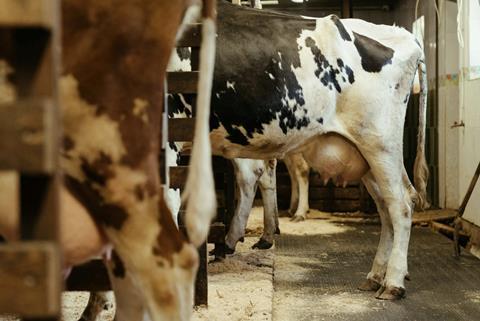
The reduction of its interest rate hedge to 20% of assets proceeded “very smoothly” and “at much lower costs than initially thought”, according to chair Arnold Jager.
The pension fund of food processing company Cosun also completed its hedge reduction on 6 January 2026 “without any significant hurdles”, said senior policy advisor Stefan Bierhoff.
At Oak pension fund, the adjustment was finalised “much faster than expected”, according to president Petra de Bruijn. “Everyone is super satisfied, because we had a gloomy estimate. In the end, it was not all that bad.”
Part of the smooth execution reflected offsetting flows. Some pension funds needed to increase hedging after conversion, including construction sector scheme Bpf Bouw.
Following higher interest rates in the final quarter of 2025, “the target for the interest rate hedging upon our DC conversion was somewhat higher than what had been set”, a spokesperson said.
Many funds also avoided a January bottleneck by acting early. A sizeable group began adjusting hedges in December 2025, including the occupational pension fund for veterinarians, the industry schemes for painters and bakers, and the pension fund of airline KLM.
Phased implementation at larger schemes
The two largest pension funds converting this year, metals industry fund PMT and healthcare fund PFZW, have opted for a phased approach.
PMT is on schedule to “quietly reduce the interest rate hedge to the target level” in six-monthly steps, a spokesperson said. PFZW declined to provide details of its hedging policy. At the end of the third quarter of 2025, it still had an interest rate hedge of 63.5% of liabilities, markedly higher than in previous years.
Impact on the curve
While January trading was orderly, market pricing suggests pension fund activity did influence longer-dated rates in 2025.

“The yield curve steepened last year. Everything with maturities from 20 years and above has gone up,” said Marit Kosmeijer of pension consultancy Sprenkels.
Short-term rates remained broadly stable at around 2%, but the 30-year yield rose by more than 1 percentage point to above 3%. “Pension funds represent the largest part of the market with those longer maturities,” she noted.
The steepening did not continue in January, possibly because many schemes had already adjusted positions in December.
Market transparency remains limited, as bonds and swaps are often traded bilaterally.
“We do get signals that large volumes have been traded in the first two weeks of January,” said Alex de Haas of LDI manager Cardano.
“It is quite possible that the pension sector has played a role in this, but they are not the only party active in the interest rate market. Traditionally, large European bond issues are made at the beginning of January, which can explain part of the trading volume. In addition, hedge funds have reduced positions, which were partly driven by the expectation that the pension transition would lead to a steepening of the curve in January,” he noted.
Yuri Swolfs, a derivatives trader at Rabobank, added: “We have seen an increase in activity, but not to the extent that market observers had expected.”
Risks remain
Market calm at the start of 2026 does not guarantee a smooth path ahead. Kosmeijer suggested last year’s warnings may have prompted smaller schemes to act early.
However, if pension funds scheduled to convert in 2027 conclude that disruption risks are limited and choose to adjust hedges simultaneously, volatility could resurface.
“Then that could actually lead to an impact next year,” said De Haas.












.jpg)