

Trustees have warned that the success of collective defined contribution (CDC) schemes will depend on robust governance and careful scheme design.
For Sankar Mahalingham, managing director of Law Debenture Pensions, CDC schemes, introduced through the Pension Schemes Act 2021, represent a “landmark improvement in UK pensions.”
“With the potential to deliver better retirement incomes than DC pension schemes, and avoiding the financial risk employers face with defined benefit (DB) pensions services, CDC can materially improve pension adequacy for current and future savers,” he said.
“By doing so, it places members back at the heart of the pensions ecosystem, with a member-first approach to communication, analytics and service design that can help audiences like the young savers generation who may struggle with traditional DC savings.”
The UK government is now moving to introduce regulations allowing for multi-employer CDC schemes in the autumn this year, with TPT already expressing their interest in launching such a scheme.
Ministers hope CDC schemes will address pensions adequacy, pointing out that despite the success of auto-enrolment, the lack of innovation in DC savings risks leaving many future pensioners exposed to market fluctuations and longevity risks.

The government believes that due to their anticipated larger size, CDC plans can be more efficient and better invest over the long term in assets such as infrastructure and UK businesses, supporting economic growth while smoothing retirement incomes.
However, Mahalingham cautioned that trustees must actively shape scheme design, challenge actuarial assumptions, and ensure intergenerational fairness, particularly in multi-employer contexts.
He said trustees play a key role in setting member expectations and ensuring clear, jargon-free communication about the variability and nature of CDC benefits. Trustees, he argued, should be collaborative, commercially minded, and pragmatic.
‘Rehearse difficult decisions’
Kim Nash, managing director at Zedra Governance, similarly warned that strong governance will be “absolutely central”.
She said trustees must be engaged early in approving scheme design, shaping investment approaches, and preparing for tough decisions such as reducing pension increases when required. She said that rehearsing difficult decisions will help trustees respond “with consistency and confidence”.
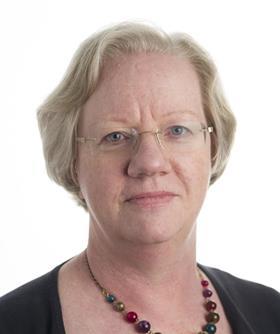
Maggie Rodge, co-chair of the Association of Member Nominated Trustees (AMNT), agreed that trustees will play a vital role, as employers bear no risk once contributions are paid.
She stressed the importance of scheme design in ensuring generational fairness and pointed to lessons learned from Royal Mail’s CDC scheme. She emphasised the importance of clear communication to members, noting that member trustees were crucial in the Royal Mail scheme achieving member acceptance.
Rodge added that member trustees will be especially important if CDC schemes are run commercially, since they can help balance the competing interests of providers and members.
She noted that the longer investment horizon of CDC schemes also gives trustees greater ability to address systemic risks such as sustainability, while aligning with the government’s wider economic goals.
At Law Debenture Pensions, Mahalingham also cited the need for trustees to remain close to regulators, manage short-term volatility, and develop dynamic communication strategies so members do not mistake target income for guaranteed income. He pointed to governance gaps, onboarding procedures, and cybersecurity as critical “resilience issues”.
Tegs Harding, trustee director at IGG, acknowledged CDC’s potential but warned it is not a “quick fix”.
She highlighted that around one in three members with DC pensions are unlikely to reach even a minimum standard of living in retirement, with women particularly affected.
She said: “CDC offers a way forward because it shares investment risk across members, rather than placing the burden on individuals alone. This allows for longer-term investment strategies and, crucially, provides a pension for life.”
She added that a CDC plan also simplifies the choice for members. She said: “In DC schemes, people face complex decisions about how to draw down their pension. In the CDC, they can be assured of a lifelong income without needing to make those calculations themselves.
Yet Harding stressed that it will take “decades” to fully address the savings shortfall and some generations will inevitably miss out.
She also raised concerns about fairness, noting that factors such as occupation and geography affect life expectancy, raising questions over whether a single pooling system can deliver equitable outcomes.
“CDC has real potential to improve member outcomes, but it must be designed with fairness at its core if it is to play a meaningful role in tackling the pensions adequacy challenge.”