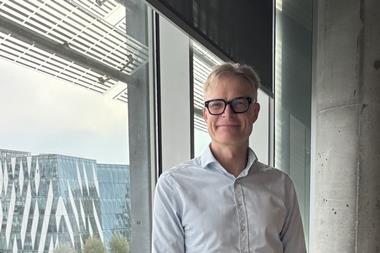




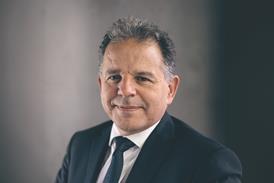


Morten Malle, CIO of the Danish pension fund for teachers, describes how the scheme has taken steps to facilitate efficient investment of future contributions
- Lærernes Pension
- Type of pension fund: Danish labour-market pension fund
- Members: 167,000
- Total assets, end 2025: DKK190bn (€25bn)
- Asset allocation:
Equities - 46%
Sovereign bonds - 18.2%
Corporate bonds and illiquid credit - 18.2%
Unlisted equity - 17.6%
Reflecting on the work we’ve done in recent years at Lærernes Pension in the field of investments, I would say we’ve significantly strengthened our investment capabilities.
We have added resources and defined our asset class strategies. We have added new tools, put new infrastructure reporting in place, and worked on the ESG side to broaden data coverage.
We decided to create new asset class strategies in order to have better manageability when it comes to costs and capacity. By doing that, we have improved our scalability and also the efficiency.
We have also expanded our exposure to private markets, and now have strong momentum there when it comes to committing capital to investments.
The work we’ve done within our investment management operation since 2023 has created a good landing strip for new investments — because we have clear processes for who’s responsible for doing this and that.
The real incentive for strengthening the investment operation and creating this landing strip has been the new capital inflows we know we will have over the next few years.
Our net premiums will be positive for years to come — partly because of the demographics of our membership, and also because many teachers in Denmark had no private pension before our scheme was created in 1993, since they were previously covered by a government pension.
Our current AUM is DKK190bn, and including our leverage of 15% plus premiums and expected returns, within five years we see our AUM exceeding DKK250bn. In 10 years time, we should be well beyond DKK300bn.
At the same time, our aim is to reach 35% in private market exposure in five years, up from today’s exposure of 27% now, so in 10 years’ time, our private market exposure could exceed DKK100bn.
Returns have also been building up. After several years of quite favourable markets, we have had a total return on investments of 43% since the beginning of 2023.
At Lærernes Pension, we use external managers to a large extent, although we do some investment management in-house - mostly of our overlay portfolios, which we have for fixed income, currency hedging and equities. Our domestic real estate management is also in-house.
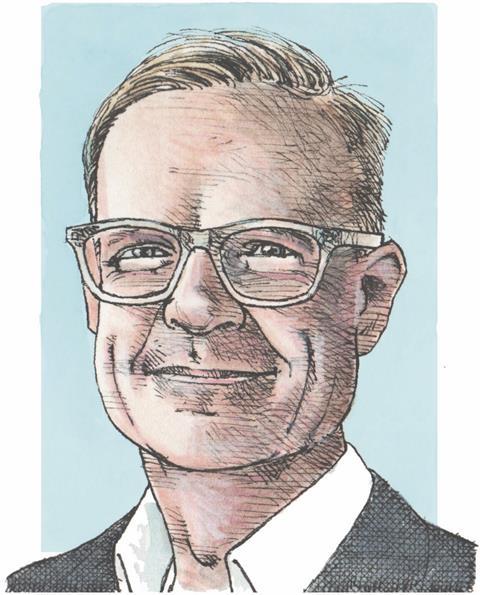
We have paid particular attention to our lineup of external managers because of our focus on scalability. A major consideration when making changes involving our managers and investments is how we are going to be able to scale it - because our managers will need to do 50% more for us within five to 10 years.
In 2023, we introduced a new strategy for listed equities. At the time, we had around 12 external managers for equities, and close to 3,000 positions, but when we added it all up, we were close to simply holding the market portfolio.
So we reasoned, why pay active managers for something that was, in aggregate, just the market? Those 3,000 positions also exposed us to a certain reputational risk from ESG issues, and we wanted to do something about that too.
With the new equity strategy, we aimed to halve the number of positions, managers, and fees. We succeeded, and today the cost of running our equity portfolio is below 10 basis points for the core, while we do pay more for the satellites.
Whatever the markets bring in the next few years, we are ready for more investment.
Looking ahead, I think the biggest challenge as a pension fund investor is to stay invested when times are uncertain, and to remember that you are a long-term investor.
Perhaps the markets will crash, there could be a crisis, and equities fall by 30%. But still, the biggest failure you could allow is not to stay invested.