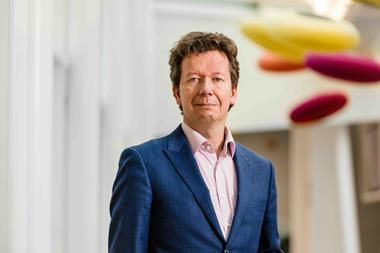







AP7’s head of sustainability Charlotta Dawidowski Sydstrand explains how international norms and credible transition plans shape its investment decisions
We do not exclude entire sectors. Our approach is norm-based, which means that our exclusions are linked to specific international norms, such as human rights and international humanitarian law, rather than to specific industries. Companies may therefore be excluded because of their conduct or involvement in activities that are inconsistent with those norms, but not simply because they operate within a particular sector.
- Sweden’s state alternative to private funds in the premium pension system
- Around six million premium pension savers
- Investing pension savings since 2000
- Assets under management of approximately SEK1.53trn (€141bn) at end-December 2025
- Based in Stockholm
That is also why we don’t see the defence sector as either acceptable or unacceptable. Different companies face different risks and challenges, and these need to be assessed on their own merits. This also explains our approach to controversial weapons. Our exclusions are linked to specific international norms and conventions, not to a broader view on the role of defence-related activities in society.
It’s also worth remembering that the norms underpinning our framework are not something AP7 has defined itself. They are based on international conventions that Sweden has chosen to support through democratic processes.
We do not assess transition potential based on management statements alone, nor on any single metric. Instead, we look at the company as a whole and assess whether it has a credible ability to transition its business over time. This includes considerations such as the company’s strategic direction, governance, financial capacity and how it manages transition-related risks and opportunities.
When assessing transition progress, we look beyond commitments. What matters is whether companies are taking credible steps to transition their business. That includes emissions targets, capital allocation, governance arrangements, implementation milestones and evidence that transition plans are being integrated into business decisions.
We also take a long-term perspective. Transitioning business models and decreasing real-economy emissions takes time, particularly in sectors where assets and investment cycles are measured in decades rather than years. We are not looking for perfection overnight, but for evidence that a company is moving in the right direction and making meaningful progress over time.

We want to strengthen our ability to focus our ownership efforts where they can make the biggest difference
At the same time, engagement is not open-ended. We continuously assess whether a company is making sufficient progress against our expectations. If we conclude that meaningful progress is no longer achievable, or that engagement is unlikely to influence outcomes, exclusion may become the more appropriate course of action. The timing will always depend on the circumstances of the individual case.
We expect companies issuing bonds to have credible emissions targets and a transition strategy. This is not just a sustainability issue but increasingly a question of financial risk, creditworthiness and the long-term resilience of companies. If an issuer is unable or unwilling to demonstrate credible progress, that would be a relevant consideration in our investment assessment and portfolio construction decisions.
Green bonds are somewhat different from conventional corporate bonds because they give investors more visibility into how capital is being used and what projects are being financed. This can make it easier to assess the intended environmental impact and follow up on results. At the same time, we do not think the label alone is sufficient. We also want to understand the company behind the bond, its broader strategy, governance and ability to manage transition-related risks.
Looking ahead, we want to strengthen our ability to focus our ownership efforts where they can make the biggest difference. This means building deeper knowledge of the companies we own, developing our own analytical capabilities and becoming more proactive in our engagement.
We also see an increasingly important role for policy engagement, as many of the sustainability challenges that affect long-term investors, including climate change, nature-related risks and aspects of geopolitical stability, cannot be addressed through company engagement alone.
The more relevant question is whether collaboration contributes to measurable outcomes that individual investors would struggle to achieve on their own. We continue to see value in collaborative engagement where investors can pool expertise, increase leverage and engage consistently over time.