




Two-thirds of investors expect physical climate risks to hurt asset prices over the next five years, according to a survey published on Tuesday.
Dutch investment house Robeco asked 300 institutional and wholesale investors globally for their views on the state of climate investing, for its annual survey on the subject.
The results show that 66% believe the physical effects of climate change will have “a moderate or significant impact” on asset prices in the coming five years, increasing to 82% over the next decade.
Roughly the same proportion expect those effects to influence their own organisation’s strategic asset allocation decisions, risk budgets, capital market assumptions or stock picking over the next five years.
“It is not surprising that investors see the impact of physical climate risks increasing over time,” wrote Robeco in a report outlining the findings.
“They can see that a wide range of potential assets are likely to be increasingly affected by acute physical risks such as drought, wildfires or flooding.
“For instance, flood-prone properties in countries such as the US and the UK have seen falls in property values,” the report noted.
“And properties in coastal areas vulnerable to storm surges or rising sea levels, such as parts of Florida, are seeing insurance premiums increase sharply, or are even becoming uninsurable.”
It added that transport infrastructure and crop yields are also increasingly being hit by severe weather events.
Last week, the European Insurance and Occupational Pensions Authority (EIOPA) identified extreme heat as “the leading climate-related liability risk” for insurers and pension funds.
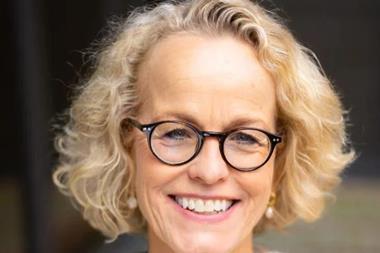
”With the natural catastrophes of recent years, it has become apparent that our physical infrastructure is increasingly at risk from floods, storms and wildfires,” said EIOPA’s chair, Petra Hielkema, at the time.
“But climate change also has quieter, less visible consequences – ones that show up more forcefully in statistics than in photographs,” she added.
“The impact of heatwaves on human health is one of them, and our preliminary study shows that it could become a material risk factor for certain insurance lines and pension providers, despite offsetting factors and strong diversification across products and risks.”
To help tackle the problem, the supervisor has developed “an illustrative risk-scoring framework” to estimate the impact of heatwaves on different types of undertakings, lines of business and countries.