





Australia’s sovereign wealth fund, the Future Fund, which was designed to cover unfunded Federal government pension liabilities, is poised to “renew and refresh”, following the appointment of Greg Combet as its new chair from mid-2024.
Combet will replace former Federal treasurer Peter Costello, who has chaired the fund for nine years, during which he has overseen the doubling of its assets under management to A$212bn (€128bn) today.
Costello set up the Future Fund in 2006 with an allocation of A$60.5bn, mostly from budget surpluses of the preceding three years.
Unlike the first Future Fund chair, David Murray, a prominent ex-banker, or Costello, who is from the conservative side of politics, the incoming chair is a former Labor minister.
He is regarded as a union and superannuation heavyweight, having chaired both the now-defunct Industry Super Australia and IFM Investors, which is owned by industry super funds. He is also a trustee of AustralianSuper. In those roles he had oversight of policies and investment decision-making of many hundreds of billions of super capital.
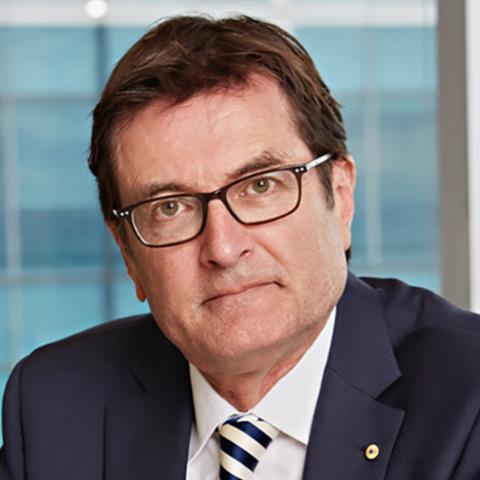
“One of the things in my mind is about how institutional investors can be involved in the energy transition in a more significant way”
Greg Combet
Combet is chairman of the government’s Net Zero Economy Agency, a position he will vacate when he joins the Future Fund. He is more passionate than his predecessors on issues such as green energy and social and affordable housing, and a strong proponent of environmental, social and governance (ESG) measures.
In his previous roles, Combet has repeatedly advocated ways to “unlock” the country’s superannuation savings to invest in what he has called nation-building projects. He said last year that Australia needed to unlock capital from super funds and other institutional investors to invest in the energy transition: “One of the things in my mind is to be thinking about how we can open up investment opportunities for commensurate risk-adjusted returns for institutional investors…. to be involved in the energy transition in a more significant way, to be in the decarbonisation process by taking stakes in companies, or by being lenders to assist that happening, to co-invest with institutions like the Clean Energy Finance Corporation [the state- owned green bank, which Combet set up when he was a minister].”
Fears over union influence
His appointment has raised fears of a deepening union influence over Australia’s A$3.6trn superannuation pool.
Along with pointed comments from both former chairs of the Future Fund, daily newspaper The Australian has warned against any temptation to raid the national piggybank, because it would risk robbing wealth from future generations, the antithesis of what a sovereign wealth fund is all about.
Former Future Fund chairman Murray, who is now chair of the International Forum of Sovereign Wealth Funds, says the SWF must remain independent of government and not be liquidated for “nation-building” projects.
“It is disappointing to see the emergence of political freeloaders wanting pet projects and inferring more debt on the back of the recent articles and criticism of the fund which has turned out to be an Australian institutional asset highly-regarded around the world,” Murray said when releasing his new paper, A Better Future with a Future Fund, which was published by the Centre for Independent Studies (CIS), a think tank.
“The fund had shown clear success in maintaining its independence through clarity of mandate, commercial investment principles and accountability,” Murray says.
The fund’s annual return since inception is 7.5% against the benchmark of 7%.
The Future Fund is Australia’s largest financial asset. At the end of last year, it had A$272bn in assets under management, including more than A$60bn from six smaller sovereign funds, including the newly-created A$10bn Housing Australia Future Fund.
Australia’s flagship retirement scheme was created to address the defined benefit, unfunded superannuation liabilities of federal public servants and military personnel.
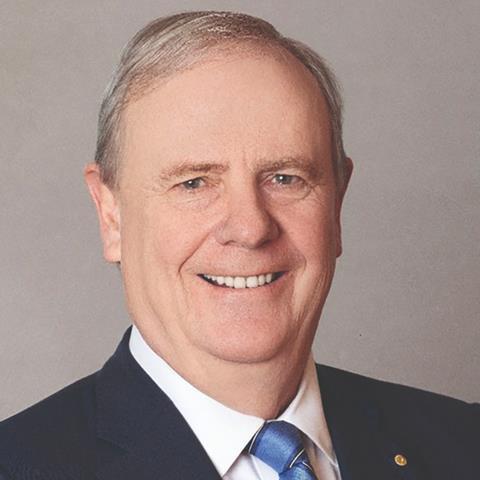
“As the government’s financial position declines, I expect we will see more plans to spend the fund”
Peter Costello
Recent budget papers forecast that Australia’s unfunded liabilities will grow to A$284bn by 2026 and to A$432bn by 2050.
If the Future Fund can continue to return around 10% on average, it is expected to have assets matching the unfunded liabilities by 2026 or 2027. The Future Fund’s cash earnings and net assets are consolidated into the Commonwealth budget accounts.
CIS economists estimate that the fund could reach A$800bn by 2040.
Although legislation permits drawdowns from 2020, the previous conservative coalition government announced in its 2017-18 budget that it would refrain from making withdrawals until at least 2026-27.
But with national debt now rising to half a trillion dollars, partly because of COVID spending, demand for government funding is coming from all areas. For cash-strapped governments, the Future Fund is the tempting honeypot.
In his last major speech as Future Fund chair last November, Costello said: “As the government’s financial position declines, I expect we will see more plans to spend [the fund]. It would be a way of favouring current voters over future voters – the ones who are not voting yet.
“But remember this – once it is spent, it is gone. Once it is spent, there is no significant asset on the government’s balance sheet. Once it is spent, there is nothing to offset the growing liabilities of debt or unfunded pensions and unfunded military injury claims.”
He advised his successor as chair of the Future Fund to resist government intervention. His greatest fear, he says, is that “some government” will start using the fund as “a political device”. That would kill it, he warned.
Resisting pressure
Combet’s greatest challenge, therefore, will be to resist any pressure from government to use the fund to meet budget shortfalls.
Opinions are divided when it comes to reducing the country’s debt. In a paper last year, a CIS economist, Dimitri Bushtein, built a case for liquidating the fund and using the proceeds to pay down government debt.
Federal Treasurer Jim Chalmers has said he will discuss the investment direction of the Future Fund with Combet.
“What we want to do here is to make sure that the Future Fund is an important economic and financial institution into the future. The first step in ensuring that is to make sure we get fresh thinking and fresh leadership.”
Combet is unavailable for interviews about the Future Fund until he starts in the role mid-year, but in a statement, he described the fund as an “outstanding national asset”.