





As more foreign-owned companies circle the sector, once the preserve of banks and profit-for-member firms, questions are being raised as to its next evolution.
With New York-based private equity firm CC Capital winning the bid to acquire Australia’s fifth-largest superannuation fund, foreign ownership is set to play an even deeper role in the country’s expanding retirement savings sector.
In July, the board of listed Insignia Financial Group accepted a A$3.3bn (€1.9bn) offer from CC Capital to acquire the company, which managed A$330bn in assets – including A$121bn in superannuation savings – as of 30 June 2025. The transaction, subject to shareholder and regulatory approval, is expected to take six to nine months to complete.
CC Capital, along with co-bidder OneIM, will acquire 100% of Insignia via a scheme of arrangement, paying A$4.80 per share in cash – a 56.9% premium over Insignia’s pre-offer share price of A$3.06. The bid put the company’s enterprise value at A$3.9bn.
Insignia initially attracted three bidders: CC Capital, Brookfield and Bain Capital. Ironically, it was Bain that initiated this round of bidding, prompting responses from the other two. However, citing global economic uncertainty linked to US President Trump’s ‘Liberation Day’ tariff policies, the private investment firm withdrew from the race.
CC Capital, however, remained committed. The firm had been eyeing the Australian market since 2019, and this marks its first investment in the country. Commenting on the acquisition, Chinh Chu, senior managing director of CC Capital, said: “Insignia’s scale, trusted brands and deep relationships across the A$4.1trn superannuation market make it a compelling long-term platform for growth.

“We recognise the high duty of care required to steward a business with Insignia’s heritage and strong ties to the retirement system. We are confident our investment expertise and long-term perspective will enhance member outcomes and strengthen the company’s operational trajectory.”
To support the acquisition, CC Capital partnered with OneIM, a global alternative investment firm founded in 2022 that manages US$7bn. The goal is to combine Insignia’s legacy with modern investment and technological capabilities that OneIM can offer.
Chu, a former Blackstone veteran who founded CC Capital in 2015, had previously missed out on acquiring MLC when National Australia Bank, a leading bank, sold it in 2019. The business was instead snapped up by IOOF, a financial services company established in 1846 with roots in the Independent Order of Odd Fellows, a longstanding fraternal order.
Changing wealth management landscape
Over the previous five years, IOOF had acquired ANZ Bank’s OnePath superannuation business for A$830m, but it was the A$1.4bn purchase of MLC that truly elevated the company’s status in Australia’s wealth management landscape. This expansion led to the rebranding of the company as Insignia Financial.
However, the debt-fuelled growth strategy drew criticism from activist investors, eventually resulting in the ousting of then-CEO Renato Mota and the appointment of Scott Hartley. Hartley launched a cost-saving initiative and introduced a new 2030 strategy, which has already started delivering results.
In the June quarter, Insignia reported A$1.1bn in net inflows, with its master trust (super money) flows nearing breakeven after a prolonged period of outflows — driven largely by corporate super contributions.
From CC Capital’s standpoint, the MLC brand – now a core part of Insignia – is better positioned than it was five years ago to expand in Australia’s highly competitive superannuation market.
Foreign-owned firms are increasingly making inroads, although not yet a serious threat to domestic players. They have invested – and will be investing – heavily in Australia. Most of all, they have deep pockets and a wealth of global expertise that can be imported to boost their Australian business.
Today, they control three of the top 15 funds.
According to Mercer’s 2024 Shaping Super report, Australia’s super industry is projected to reach A$13.6trn by 2048. Between 10 and 15 mega-funds (each with more than A$200bn under management) are expected to dominate the market. The number of funds is anticipated to decline from 107 today to 77 by 2048 – a steep drop from 232 in 2015.
Improved performance and technology investments
Retail superannuation providers, once overshadowed by industry and not-for-profit funds, are rebounding, aided by improved performance and investments in technology that have helped them cut fees and attract new members.
CC Capital becomes the second U.S. private equity firm to secure a major stake in an Australian super fund. KKR previously acquired 55% of Colonial First State (CFS), with the Commonwealth Bank of Australia retaining 45%. KKR outbid Blackstone to clinch the deal, valued at A$1.7bn.
With KKR’s backing, CFS has announced plans to grow by acquiring “subscale” providers in a bid to consolidate the sector. CFS currently manages about A$160bn in retirement savings.
Vanguard, the US$10trn American investment giant, made a bold move when it transitioned from managing super fund investments to becoming a super fund itself. In 2019, it handed back A$100m that it was then investing for Australian super funds.
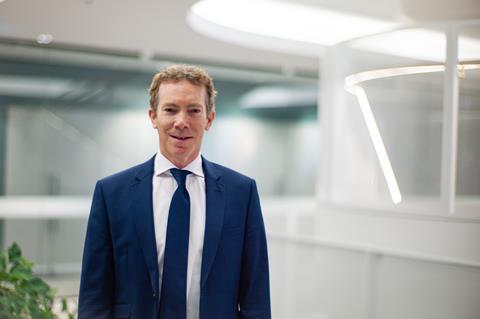
“We’re on the glide path we’d hoped for. Over 48,000 Australians have entrusted us with A$3.5 billion in retirement savings,” Daniel Shrimski, managing director of Vanguard Australia, tells IPE. “Since we’re not part of any award system, each one of those Australians made the active choice to join Vanguard Super.
“We brought low-cost index investing to Australia nearly 30 years ago through managed funds and ETFs,” Shrimski adds. “Now we’re applying the same philosophy to superannuation since 2022. Our default Lifecycle fund offers the lowest annual fee in its category – A$280 on a A$50,000 balance for members aged 47, compared to the industry average of A$457. The fund returned 13.5% to members aged 47 and under. Our growth option also performed strongly, delivering 11.8%. We’re achieving strong outcomes through a disciplined, index-based approach.”
Shrimski emphasises Vanguard’s unique positioning. “We’re the only super fund with a global investment management heritage,” he says. “With 50 years of experience and more than 50 million clients worldwide, we’re able to offer Australians a comprehensive wealth solution - both inside and outside of super.”
Taking the merger route
Another US player, Mercer (a subsidiary of Marsh McLennan), went down the merger route. In 2023, it finalised a merger with BT Super – previously owned by Westpac Bank, another of Australia’s big four – creating a A$63bn fund. BT Super was the last bank-owned super fund in Australia.
The deal signals Mercer’s intention to double down on its commitment to the Australian market. Mercer Super is now the seventh-largest fund in Australia, according to the Australian Prudential Regulation Authority.
David Bryant, president of Mercer Pacific, called the merger a “new paradigm” for the super sector, which had been abandoned by many larger companies amid a resurgence of trade union-linked and not-for-profit funds.
Speaking to the Australian Financial Review following the merger, Bryant said: “The merger with BT is a clear statement of our ambition in Australian superannuation. It gives us access to thousands of small to medium enterprises and financial advisers. We now have more buying power than any of the mega-funds – what we lacked was local scale.”
He added that the superannuation industry had evolved through several iterations. “There was a time when the banks dominated, followed by the rise of profit-for-member funds. The question now is: what’s the next evolution of this market?”









.jpg)