



Latest from IPE Magazine – Page 96
-
 Features
Long term assets: Proposed vehicle aims to help DC funds access private asset classes
The UK’s chancellor of the exchequer, Rishi Sunak, has set an ambitious timetable for the launch of a new UK-authorised fund vehicle, the Long-Term Asset Fund (LTAF), by the end of 2021. The LTAF is envisaged to simultaneously help achieve several policy goals by directing pension savings into alternative investments.
-
 Asset Class Reports
US high yield: A changing market
US high yield looks attractive against investment-grade credit although there are important changes for key sectors
-
Country Report
Politics and investment: Germany looks to Sweden
Politicians are looking abroad for ways to boost equity investment in long-term savings
-
 Special Report
AP3’s partnership approach
Claudia Stanghellini, head of external management at Tredje AP-fonden (AP3), talks about the fund’s strategy when selecting managers
-
 Asset Class Reports
Trade Finance: Weathering the storm
Trade and supply-chain finance has faced several threats in recent years but the opportunity for institutional investors is alive and well
-
 Country Report
Austria: Sustainable growth remains elusive
Austrian providers are calling for solutions to make occupational pensions more appealing in light of demographic pressures and COVID-19 fallout
-
 Interviews
On the record: Value makes a comeback
IPE asked two European institutional investors what biases are built in their equity portfolios, as value equities show signs of new-found strength
-
Features
Dual-class share plans fuel concern over stewardship and governance
Introducing dual-class share structures to make London a more competitive financial centre would weaken shareholder rights and make it harder to influence corporate behaviour, institutional investors and trade bodies have warned.
-
 Interviews
Strategically speaking: Allianz Global Investors
Allianz Global Investors (AGI) has long invested in green infrastructure. The market, and the perception of renewable energy for investors in particular, has changed during this time. Investors are ready to engage with renewable energy or cleantech if the underlying technology has a proven track record.
-
 Interviews
How we run our money: Sampension
Henrik Olejasz Larsen, CIO at Denmark’s Sampension, talks to Carlo Svaluto Moreolo about the fund’s bias towards value equities and its diversification strategy
-
 Opinion Pieces
Sustainability: A purpose-driven stock exchange
The UN Sustainable Development Goals (SDGs) have caught the imagination of the investment world. For many in the millennial generation the idea that its investments should fulfil positive social or environmental impacts seems self-evident. Yet many asset managers still struggle to incorporate SDGs into their strategies. Nor do they hesitate to trumpet questionable ESG credentials to investors.
-
 Opinion Pieces
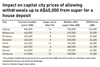
Letter from Australia: Should super savings fund homes?
A post-COVID-19 housing boom has made the future of Australia’s A$3trn (€2trn) superannuation savings pool a hot topic.
-
 Opinion Pieces
Letter from US: Pension bonds raise concerns
The resurgence of interest in pension obligation bonds (POBs) is one of the effects of the pandemic on the US pension funds industry. Indeed in 2020 POB issuance reached its highest level in a decade, exceeding $6bn (€5bn), according to Municipal Market Analytics (MMA), an independent research firm focusing on the US municipal bonds.
-
 Features
DB accounting: Lump-sum benefits
Service-defined lump-sum payments are causing accounting attribution problems
-
 Features
Perspective: UK actuaries and COVID-19 – Exceeding expectations
COVID-19 has brought few positive outcomes but the response from UK actuaries could become a template for bringing other strategic challenges to the fore
-
 Opinion Pieces
Guest viewpoint: Francesco Curto, DWS
The UK’s report into the Economics of Diversity, the Dasgupta review, highlights that our economic model is not sustainable
-
 Features
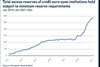
Fixed Income, Rates, Currencies: Rising yields signal reflation
The Federal Reserve has not hinted at its future plans to unwind quantitative easing (QE). However, markets are looking to 2013’s ‘taper tantrum’ for an explanation of the dramatic US-led bond market sell-offs.
-
 Features
Ahead of the curve: Modelling the unmodellable
In January 2020, the world was on the verge of a pandemic. It would empower the state, increase the might of technology firms, speed up technological adaptation, upend cities and accelerate China’s rise.
-
-