



Latest from IPE Magazine – Page 101
-
 Country Report
CEE – Romania: Funds fight through
Conservative portfolios have served Romanian pension funds well through the crisis
-
 Special Report
Defined contribution: Australia's super review re-opens old battlegrounds
The Callaghan report on Australia’s universal superannuation system has rekindled a row between the government and the labour movement
-
 Opinion Pieces
Uncertain conditions call for a steady course
The impact of COVID-19 has made long-term strategies that embrace resilience a high priority for pension funds to ensure there is a smoother ride during turbulent times.
-
 Country Report
CEE – Estonia: Preparing for a liquidity storm
A rule allowing early withdrawals is changing the dynamics of the Estonian pension business
-
 Features
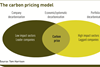
Long term matters: What kind of decarbonisation matters most?
This article was written on the fifth anniversary of the Paris Agreement. In 2015, the world committed to keep warming below 2°C, meaning decisive annual reductions in greenhouse gas (GHG) emissions. Instead we have had a 7% increase in GHG since 2015 and are on track for about 3°C warming with a high risk of irreversible tipping points.
-
 Interviews
Exit Interview: Peter Borgdorff - “I wasn’t the specialist… and I think that was my advantage”
Polder in the Netherlands is the low-lying land reclaimed from the sea. By extension, it also refers to the highly developed social contract system between politics, business and labour.
-
 Interviews
Exit Interview: Jordi Jofra - Still thinking outside the box
It is well into Spain’s lockdown and Jordi Jofra is ensconced in a village 40km from his former office in Barcelona. One of his lockdown boxes ticked has been to finish reading Men without Women, Haruki Murakami’s best-selling collection of short stories on men and alienation – perhaps appropriate for the times.
-
 Interviews
On the record: Search for robust equity portfolios
IPE asked two investors how their equity portfolios are positioned
-
 Interviews
How we run our money: BT Pension Scheme
Frank Naylor, CIO of the UK’s BT Pension Scheme, talks to Carlo Svaluto Moreolo about building a resilient portfolio
-
 Features
ESG: Engaging with sovereigns
One of the narratives and unfolding developments in the world of ESG is that of its broadening to asset classes beyond public equity. This generally keeps the focus on corporates, however, while another emerging strand is about sovereign issuers.
-
 Opinion Pieces
Biodiversity can be measured
Last year was clearly the year of the pandemic. Perhaps the connection between zoonotic disease and biodiversity loss may explain why it has also been the year that biodiversity has become a theme of great interest for investors. Yet current environmental, social and governance (ESG) data and metrics do not cover biodiversity adequately.
-
 Opinion Pieces
Guest viewpoint: Jesper Kirstein
In recent months, the asset management industry has been dominated by adjustments inspired by the COVID-19 pandemic. This article will try to look beyond this and address the question of where the asset management industry is moving in the medium to long term.
-
 Special Report
Accounting Matters - IAS 19: the negative view
Negative interest rates are probably the most daring policy move most of us will ever see. The idea that a borrower is paid to take out a loan, but a saver is penalised for setting aside money for their retirement turns our understanding of the fundamentals of finance on its head. But Europe has had them for more than a decade. And if the experience of today’s financial crisis is anything to go by, it will do so for a while longer yet. So where does this leave defined benefit (DB) sponsors and their accountants?
-
 Opinion Pieces
Letter from US: Don’t anticipate radical reform
The new Joe Biden administration is unlikely to revolutionise US pension plans, but it could broaden the base of workers able to join defined contribution plans such as 401(k)s. It may also cancel recent rules and return to the previous regulations set under Barack Obama.
-
 Features
Perspective: Litigation - state of pay?
Changes in legislation like the UK’s Consumer Rights Act 2015 have led to an increase of class actions led by pension funds as they seek to recover investment losses
-
 Features
Research: The shift from virtue to value
In the final article in a series of two, Pascal Blanqué and Amin Rajan argue that the success of ESG investing rests on a just transition to a low carbon future
-
 Features
Strategically Speaking: Hendrik Bartel, TruValue Labs
What makes ESG data providers stand out? For TruValue Labs, the answer is to apply AI and machine learning to thousands of unstructured data sources to enhance ESG investment processes
-
 Features
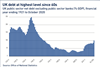
Fixed Income, Rates, Currencies: A very different recovery
Amongst the remarkable happenings in 2020, from startling news of a pandemic to viable vaccine and beyond, has been the speed and scale of interventions from central banks and governments.
-
 Features
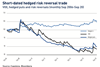
Ahead of the curve: Options trading as a portfolio diversifier: pilot or passenger?
Options can provide insurance against market volatility, but require detailed knowledge to ensure success
-