




Hermes Infrastructure has rejected allegations that it improperly exposed pension investors to excessive risk through a £104m (€120m) investment in Swedish wind farms, arguing in a newly filed High Court defence that losses resulted from unprecedented and unforeseeable market conditions rather than investment mismanagement.
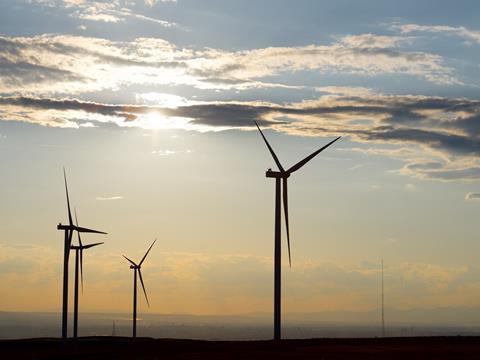
The proceedings, brought by Aberdeen City Council as administering authority for the North East Scotland Pension Fund (NESPF), concern the Hermes Infrastructure Fund II LP’s investment in the Ventus Portfolio, a group of five onshore wind farms in Sweden with a combined generating capacity of around 813MW.
NESPF alleges Hermes wrongly categorised the investment as “core” infrastructure despite exposing investors to substantial electricity price and power generation risk.
The claimant argues that the structure of several long-term power purchase agreements (PPAs) created potentially severe losses whenever low wind generation coincided with periods of high electricity prices.
In its defence, Hermes argues the claim relies heavily on hindsight and ignores the market conditions and professional assessments that existed when the investment was made in 2019.
It stated: “It is specifically denied that the fund investment in Ventus Portfolio was ‘highly risky’ or that involved ‘an existential gamble on power generation risk and electricity price risk.”
According to Hermes, the investment was subject to extensive due diligence by internal teams and external advisers, alongside the fund’s co-investor CGN, which the defence describes as a leading global renewable energy investor.
Hermes argues that the wind farms possessed many of the characteristics associated with long-term infrastructure investments. Two of the five wind farms were operational at acquisition, while the remaining three were acquired only after construction completion tests had been satisfied.
The defence also points to long-term land rights, environmental permits, maintenance agreements with major turbine manufacturers, and project financing structures designed to operate over the assets’ full lifespan.
Hermes further emphasises that the investment formed only part of a diversified infrastructure fund and that NESPF invested in the fund as a whole, rather than directly in the Ventus Portfolio.
A central issue in the litigation is whether the investment was suitable for inclusion in the fund’s “core” portfolio, intended for more conservative infrastructure investments.
NESPF argues the fund’s governing documents required core investments to generate highly assured, lower-volatility returns with prudent leverage and stable long-term cash flows.
Hermes, however, argues that the limited partnership agreement required the manager only to determine, “acting in good faith”, whether an investment materially possessed the relevant characteristics at the time it was made.
The defendants also argue the criteria were expressed in indicative rather than mandatory language, referring to investments that would “typically”, “generally”, or “be expected to” display certain characteristics.
Technicalities
One of the most technically contested aspects of the case concerns the “baseload” PPAs used by four of the five wind farms.
NESPF claims the agreements were fundamentally unsuitable for wind generation because they required the wind farms to commit to fixed hourly electricity volumes regardless of actual wind output. According to the claimant, this exposed the projects to potentially severe losses during periods of low generation and elevated market prices.
Hermes rejects the claim, arguing NESPF misunderstands how the PPAs functioned.
It said the contracts were financially settled arrangements rather than physical delivery agreements. Hermes added that the wind farms did not physically deliver electricity directly to counterparties, instead settling differences financially using Nord Pool wholesale market prices.
According to Hermes, baseload PPAs were widely used in Sweden and regarded as a stabilising mechanism because they provided fixed-price revenue protection during periods of falling wholesale electricity prices.
Hermes also said the contractual arrangements were reviewed by external technical adviser Natural Power, which reportedly identified “no significant risks” in the PPAs before the acquisition proceeded.
Unforeseeable market developments
In its defence, Hermes places substantial emphasis on what it characterises as extraordinary and unforeseeable market developments following the acquisition.
According to Hermes, actual capture prices earned by the wind farms between 2020 and 2025 were around 48% below acquisition forecasts.
The company attributes this to rapid growth in Swedish onshore wind capacity, persistent transmission bottlenecks between northern and southern Swedish pricing zones, and a widening gap between wholesale electricity prices and wind capture prices.
Hermes further states that actual power generation across the wind farms was around 11% below forecast levels, while Swedish renewable certificate values also fell faster than expected.
Overall, Hermes argues these developments constituted an “extreme downside scenario” that fell outside the range of outcomes reasonably foreseeable in 2019.