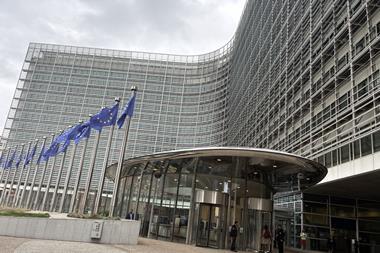

German IORPs want the European Commission to avoid overregulating and to change funding obligations as part of the review of the IORP II Directive to help channel more capital to support the European Union’s economy, which the EU executive is pursuing, according to a senior figure at the Hoechst pension fund.
The Commission’s Savings and Investment Union strategy is an opportunity for pension funds to invest in the EU, but the Commission has to put occupational pension institutions in a position to be able to invest in the EU, Christian Röhle, head of pension fund management and law at the pension fund for the employees of the Hoechst Group, told IPE.
The European Commission should steer clear of over-regulating IORPs and focus on reducing bureaucracy, Röhle added while speaking on the sidelines of the Handelsblatt occupational pension forum in Berlin last week.
He identified a rule about funding obligations in the EU pension fund legislation as another obstacle to pension funds being able to channel more capital to the EU economy.
“We need leeway to invest assets,” Röhle said, adding that the Commission should acknowledge that this is essential to foster investments in the bloc.
In its response to the EU Commission’s targeted consultation on supplementary pensions, aba, the German occupational pension association, called for the Commission to amend the legislation to require member states to allow IORPs to be underfunded for a limited period of time.
Article 14 of the IORP II Directive includes an obligation for pension schemes to be fully funded at all times, but member states can demand an exception to the rule: “Germany has not made the exception so far,” Röhle said.
The EU needs annual investments of €700-800bn until 2030 to remain competitive on the world stage, according to the Draghi report that was a “boost” for pension policies, Röhle said during a speech at the Handelsblatt event.
Reviews of the IORP II Directive and the regulation on the pan-European pension product (PEPP) are measures underpinning the SIU. The Commission is expected to present concrete proposals next week.
The latest digital edition of IPE’s magazine is now available