
The International Court of Justice (ICJ) has delivered what is being heralded as a ground-breaking opinion that countries have a legal obligation to protect the environment from greenhouse gas (GHG) emissions, which includes regulating the private sector.
The United Nations, which requested the opinion, said the court also ruled that if countries breach their obligations, they incur legal responsibility and may be required to cease the wrongful conduct, offer guarantees of non-repetition and make full reparation depending on the circumstances.
It said the court used member states’ commitments to both environmental and human rights treaties to justify this decision.
The BBC reported that judge Iwasawa Yuji said broader international law applies, meaning that countries that are not signed up to the Paris Agreement are still required to protect the environment, including the climate system.
Regulation
The ruling is being seen as paving the way for countries to sue each other over climate change, with governments also effectively being told the scope of their obligations includes regulating the private sector.
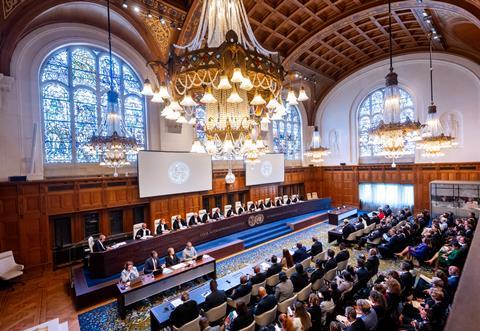
The ICJ said the obligations it identified included those of states to regulate the activities of private actors and that a state may be responsible if, for example, “it has failed to exercise due diligence by not taking the necessary regulatory and legislative measures to limit the quantity of emissions caused by private actors under its jurisdiction”.
‘Highly persuasive’
Christina Figueres, who was UN climate chief when the Paris Agreement was forged, said the opinion is “the most far-reaching legal statement ever made on the responsibility of states to protect the rights of current and future generations to a clean, healthy, and sustainable environment”.
“And it is the clearest legal affirmation to date that cooperation among states to address climate change is not optional — it is a binding obligation,” she added.
Lawyers at Ashurst have previously said that although the ICJ opinion is non-binding, it carries significant legal and moral weight.
“Advisory opinions are often highly persuasive and can influence the development of international law, shape national policies, and guide future litigation,” they said, noting that this week’s judgement could have knock-on effects for corporate liability, due diligence, and climate-related litigation.
The opinion was adopted unanimously, which the ICJ said was only the fifth time in its nearly 80-year history to have happened (the court has issued 29 advisory opinions to date).
The case was the largest ever seen by the ICJ, with 96 states and 11 international organisations presenting oral statements during hearings held in December.
The opinion was requested by the UN General Assembly following a campaign led by Vanuatu and other small island nations.
Read the digital edition of IPE’s latest magazine