
Swedish politicians have agreed to look into improving how the payout phase of the first-pillar premium pension system is managed, and whether to remove the Swedish Pensions Agency’s (Pensionsmyndigheten) mandate to manage some SEK100bn (€9.1bn) of pensions money and pass it elsewhere.
The Pensions Group of Swedish parliamentarians from all political parties announced last week that it supports launching an investigation to analyse the premium pension system’s current insurance forms and payment products.
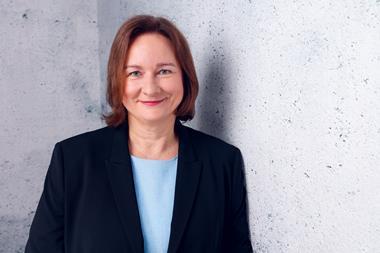
Anna Tenje, minister for the elderly and social insurance and chair of the group, said: “We want pensioners to have good predictability and good alternatives in the transition from pension savings to withdrawal of the premium pension.”
As things stood, temporary stock market declines could have permanent effects on pension payments depending on the choice made at a certain time, she said.
“This is one of the reasons why reviewing certain aspects of the premium pension is an urgent matter, in order to make it simpler and more secure for pension savers,” Tenje said.
In Sweden, the state pension consists of the income pension and the defined-contribution premium pension, with 16% of an employee’s pensionable income contributed to the former and 2.5% to the latter.
During the savings period, premium pension assets varying in value were normally not a problem, the Ministry of Health and Social Affairs said in the announcement, but added that at withdrawal it was usually desirable for payments to be more predictable.
This was why the option of moving fund savings to a traditional, with-profits, policy aimed at smoothing returns, had been introduced, the government said, adding that following that change, the premium pension default option managed by AP7 had itself undergone a change – adopting a lifecycle profile that gradually reduced risk as a scheme member aged.
“This means that there are now two state-managed payment products – while the premium pension is gaining increasing importance for the overall public pension,” the government said.
“The investigation will also consider whether the capital should continue to be managed by the Swedish Pensions Agency”
As well as evaluating traditional insurance, the investigation is to analyse whether having two state payment products is justified, it continued.
“Based on this, the investigation will also examine whether the two payment products should instead be replaced with a new special payment product, in order to better achieve the goal of a premium pension with low variation during the payment period,” it added.
The Swedish Pensions Agency estimates that the capital in the traditional insurance product it manages will exceed SEK100bn in 2026 and then continue increasing relatively quickly, the ministry said.
“For this reason, the investigation will also consider whether the capital should continue to be managed by the Swedish Pensions Agency, or whether another authority should take over the management,” the government said, giving a deadline for the investigation of 15 August 2026.
The call for change to the disbursement phase of the premium pension chimes with reform proposals included in the 2020 memorandum on the default option within the premium pension (Förvalsalternativet inom premiepensionen), which was based on a report from pensions expert Mats Langensjö.
While much of the memorandum formed the basis of legislation two years later increasing AP7’s investment freedom, Langensjö’s proposals on the payout phase – including that disbursement of default option savings be provided in the form of an annuity – were not acted upon at the time.
The Swedish Pensions Agency was reprimanded earlier this year over its loss-making investment in residential firm Heimstaden Bostad, with the FSA saying it had failed in its risk control duties. The matter also lost the FSA’s director general his job, because he had been the leader of the agency at the time of the bad investment.
Read the digital edition of IPE’s latest magazine