
Sweden’s financial watchdog has issued guidelines this morning on how financial service providers, including pension providers, should plan for war – to be able to keep operating under those circumstances.
Under the headline: ”Sweden needs financial services in war”, the Swedish Financial Supervisory Authority (Finansinspektionen, FI) announced it had developed a planning approach aiming to “clarify how companies can work to secure access to the financial services that society depends on in war.”
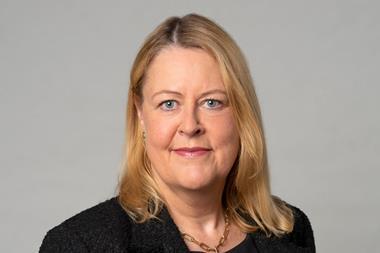
Malin Alpen, FI’s acting director general, said: “For several decades, Sweden has had collaboration on emergency preparedness issues between private companies and authorities in the financial sector.
“The serious global situation places new demands on us to develop the sector’s emergency preparedness capacity so that we reduce the risk of major and immediate disruptions,” she said.
FI said its planning guidelines, published today, contained concrete information and aimed to enable financial companies to implement measures that would make them better able to handle the consequences of a war.
The 39-page document, Planning approach for financial companies, which forms part of Sweden’s broader planning to defend itself, outlines scenarios developed by the Swedish National Security Agency and armed forces, such as a hybrid attack by Russia; NATO establishing command resources and air bases on Swedish territory; and Russia attacking Sweden from the north or via the eastern island of Gotland - while warning that a real conflict might include a combination of several of those “typical situations”.
In general, FI said, it could be assumed that a war would affect the Swedish economy by private consumption falling sharply; public expenditure rising; the krona weakening; interest rates rising; international trade decreasing; the willingness to invest decreasing; and a strong negative impact on the economy.
With regard to pensions, FI warned in the document that war might make it difficult for some time to pay these benefits, along with salaries, and unemployment benefits.
“If payments are delayed for several weeks, this will quickly affect people with small margins,” it said.
In the document, the authority said all financial companies should familiarise themselves with Sweden’s “total defence” legislation that might apply them, saying it would be good if financial providers analysed what war would mean for their existing continuity and contingency planning.
Read the digital edition of IPE’s latest magazine