





The rebranding of the Diversity Project as Inclusion in Finance signals a sharper, more commercial focus, according to Ric van Weelden. As Europe undergoes its largest-ever transfer of investment responsibility, asset managers must reflect the people they serve
When the Diversity Project launched in the UK a decade ago, the conversation about diversity and inclusion in asset management was framed largely as a values question: do the right thing, reflect the societies you serve. That sincere framing got us in the door with our founding members. But it was not, ultimately, the right framing for the industry we were talking to.
The initiative expanded to North America, and three years ago the European chapter followed. Earlier this year, all three rebranded together as Inclusion in Finance: a single global initiative, a shared name, a sharper argument.
The name change matters less than what it signals: the case we make to asset managers is not primarily moral, but commercial. Inclusion is not a standalone initiative; it is increasingly central to how firms attract clients, develop talent, make decisions and compete. Nowhere is that argument more concrete than in Europe right now.
Europe is in the middle of the largest transfer of investment responsibility in its history. For three generations, the state, employer, and insurer did the thinking for Europeans, through state pensions, defined benefit schemes, and guaranteed life products. That model rested on two assumptions, positive real rates and a young workforce paying for a smaller retired one, and both have collapsed.
The replacement is moving faster than most of the industry has absorbed. The Netherlands is moving its €1.5trn occupational system, the largest in the EU, from defined benefit to defined contribution; 9.5 million accounts began transitioning on 1 January 2026. Germany has legislated the Altersvorsorgedepot, a capital-market pension account replacing the failed Riester system, launching in 2027, alongside a planned Frühstart-Rente giving schoolchildren a pension contribution from age six. Europe is doing in a decade what the US did over forty years.
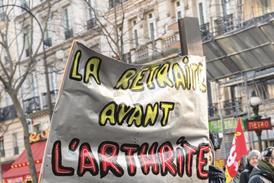
France shows what happens when reform is delayed: pensions consume 14.6% of GDP, second highest in the EU; the old-age dependency ratio is set to rise from 49% to 60% by 2050; and pension fund assets stand at just 12% of GDP, against a global average of 30%. The arithmetic is unsustainable.
Europeans are becoming investors
The consequence is that hundreds of millions of Europeans are becoming investors, most for the first time and without having chosen to. Investment literacy across continental Europe is among the lowest in the developed world. We are handing people the keys to a car they have never driven and asking them to navigate it for 40 years: a significant opportunity, and a significant responsibility, for asset managers.
Here is where inclusion becomes commercial. Firms whose advisers, product designers, and distribution networks reflect the people they now serve will be better positioned to engage this growing investor population. Those that do not will lose ground to fintechs and neobanks already built around inclusive design.
“Hundreds of millions of Europeans are becoming investors, most for the first time and without having chosen to”
Trust is the binding constraint on engagement. People do not trust institutions whose representatives do not look, sound, or share lived experience with them. At this scale, the cost of getting it wrong is not reputational; it is millions of inadequate retirements.
That is why inclusion can no longer be viewed solely through workforce representation. It is increasingly about understanding customers, broadening perspectives and improving decision-making. The question for European asset managers is simple: how fast can they transform who they are, before the people they need to serve decide the industry is not for them?
Five ambitions for five years
These challenges are reflected in the refreshed strategic framing that came with the rebrand: five ambitions for the five-year horizon. Inclusion for all: genuinely inclusive cultures, not just representation metrics. Cognitive diversity: how teams think, not who is in the room. Under-representation: addressed with country-level evidence, not generic benchmarks. European sector impact: critical mass, trade association ties, and CSRD alignment. And faster progress: accountability and benchmarking across the global chapters as one proposition.
That last point matters more than it appears. The inaugural global event in London in June brought the European, UK and North American chapters together for the first time, connectivity that matters for the many member firms with a global footprint.
Building the European chapter
The firms that make inclusion work are not the ones with the most sophisticated strategy documents. They are the ones where a senior leader decided it mattered and created the conditions for others to act. That is why we built a membership organisation rather than a consultancy or a campaign: peer learning remains one of the most powerful ways to drive change in an industry facing common challenges. When a COO at one firm sees what a peer has done with the same constraints, something shifts.
European asset management has a genuinely distinct context – regulatory, linguistic, cultural – that makes a UK or US import insufficient. We exist to build inclusion in Europe, from within the industry, for the industry, but as part of a global network that gives the work reach beyond any single market.
Our rebrand to Inclusion in Finance reflects that next phase: a broader understanding of what inclusion means, a greater focus on outcomes, and a more coordinated approach across markets. The ambition is not modest. But neither is the opportunity.
Ric van Weelden is chair of Inclusion in Finance Europe