
Norway’s sovereign wealth fund is “fairly likely” to disappear over time, the leader of the fund’s management told the Norwegian public on Tuesday, a day before revealing a record half-year return for the Government Pension Fund Global (GPFG), which is now worth NOK22.7trn (€2.1trn).
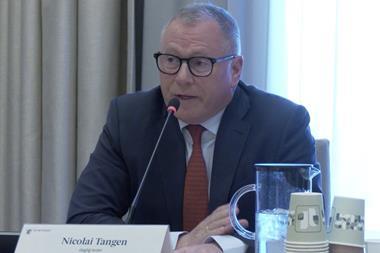
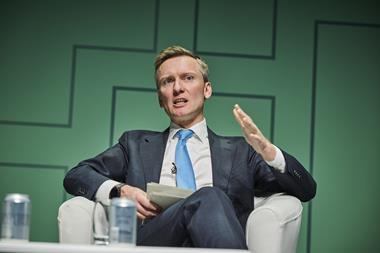
Delivering a speech at Arendalsuka (Arendal Week), an annual political debating event, Nicolai Tangen, chief executive officer of Norges Bank Investment Management (NBIM), emphasised the importance of the GPFG for Norway’s public spending – against the background of today’s need to prepare for disaster.
Tangen referred to Norway’s declaration of 2026 as the year of “Total Defence”, a label meant to galvanise the armed forces, civilian authorities, business and the population in the face of security threats prevailing since Russia’s 2022 invasion of Ukraine.
He said: “The idea is that we should be thinking about preparedness. We should be thinking through the question: ‘what if…?’”
Since money had first flowed into the sovereign wealth fund, he said the GPFG had been “the piggy bank for the whole of Norway”, according to a translation of his speech published on NBIM’s website.
“My job is simply to earn as much money as possible for this fund, but its importance to the Norwegian economy cannot be overstated,” he said, noting that the value of investments could go up and down.
“So, I will try to contribute a little to our shared mental preparedness by asking the question: can the fund disappear? The answer to that question is ‘yes’ – and the worst part is that in the world we live in today, it is fairly likely.
“There is no country in history that has managed to hold on to a large financial fortune over time. Fortunes are always lost in the end,” Tangen added.
Over the last 15 years, in US dollar terms, the GPFG had returned 14% a year on average, he said.
“For a fund like ours, what can we attribute this fantastic equity return to? Largely luck,” he said, adding: “We caught a wave in international markets that we have been able to ride.”

On whether it would continue, Tangen related examples of historical financial disasters, and a comment from European Central Bank president Christine Lagarde in that today’s world was worryingly reminiscent of the early 1920s, which led to the Great Depression.
“If the AI bubble bursts at the same time as a trade war between the US and China escalates, we could see what is known as a balance-sheet crisis – where businesses and households sharply cut debt and spending at the same time,” Tangen said, adding that this was just that kind of spiral precipitating the 1929 depression.
However, he said because today central banks had a toolkit including emergency lending, deposit guarantees, and cooperation between central banks, a new, full-blown depression was less likely.
“But it is not something we can rule out. Because debt levels and market pricing today do in fact share common features with back then,” the NBIM CEO continued.
“How would the fund have fared if a similar financial crisis were to happen today? A simplified picture, of course, but we can assume that at least 80% of our equity values would disappear,” he said.
Unveiling half-year returns achieved by the GPFG at a press conference in the coastal town of Arendal yesterday, NBIM said the fund returned 9.4% in the first six months of this year, with an accounting return of NOK1.75trn, “the highest half-year krone return on record” – and had beaten the fund’s benchmark by 0.22 percentage points.
“The result is driven by good returns in the equity market, particularly from Asian technology stocks,” Tangen said. Equities alone – which make up 72% of the fund – returned 13% between January and June.
Rounding up his keynote speech on Tuesday, the NBIM CEO said he had been aiming to remind people they could not rely on the future being as bright as the past.
“It’s not especially popular to be the one pointing out that things can go down when they seem to be heading for the sky. But perhaps that’s exactly when it matters the most,” he noted.