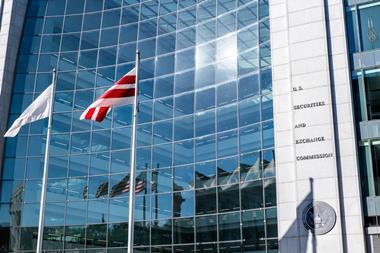







A group of Europe’s largest asset owners have urged the US Securities and Exchange Commission (SEC) not to scrap climate disclosure rules for corporations, warning that rescinding the rules could make financially material information less comparable and more expensive for investors.
The SEC formally proposed rescinding the Biden-era climate risk disclosure rule for corporates in May.
Asset owners challenging the SEC’s argument include Norway’s NOK22.2trn (€2trn) Government Pension Fund Global (GPFG), Norges Bank Investment Management’s (NBIM), Sweden’s AP7 and Denmark’s AkademikerPension. They argue that the rules constitute an overly burdensome and costly disclosure regime.
Rescinding the rules would leave the US without a mandatory federal climate-specific reporting regime in place for corporates, although some states have introduced or proposed their own disclosure requirements. California has a Scope 1 and Scope 2 emissions reporting law in place, although a bill requiring climate-related financial risk disclosure was halted following a court decision in November 2025.
According to the funds, investors still need climate-risk information to value assets and oversee portfolios, regardless of whether or not companies are required to produce information under a standardised framework. Something they warn will move the burden onto investors.
The funds argue the issue is not simply about the cost of disclosure, but where in the investment chain that cost sits.
Non-starter
The SEC began developing mandatory climate-related disclosure under then-President Joe Biden, and the final rules – substantially watered down from original plans – were published in March 2024. However, legal challenges followed, resulting in the rules being put on hold.
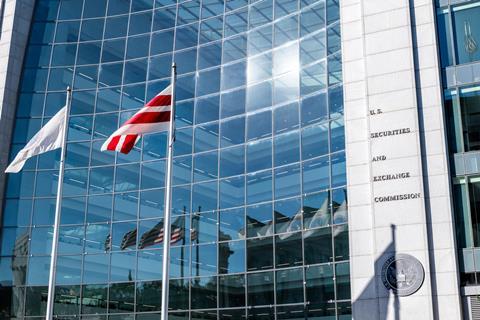
Under the Trump Administration, in March 2025, the regulator announced it had voted to discontinue its defence of the rules. It did, however, ask the federal appeals court to lift the stay on the litigation so the court could address arguments about whether the SEC had authority to issue such rules.
Earlier this year, the regulator said it had proposed the rescission of the rules in their entirety because “they exceed the scope of the agency’s statutory authority”.
Greater cost and patchy data
European investors have put forward notably pragmatic, and somewhat cautious, cases.
They argue that while climate information would not disappear entirely without a common US baseline, investors would have to obtain and verify it themselves, which risks raising costs and weakening comparability.
The manager of Norway’s NOK22.2trn (€2trn) Government Pension Fund Global (GPFG) opted, in its submission to the SEC’s 60-day comment period, to give the regulator alternatives to outright rescission of the rules – despite making clear it didn’t recommend getting rid of them altogether.

Carine Smith Ihenacho, NBIM’s chief governance and compliance officer, and Snorre Gjerde, policy lead at NBIM, said: “We support the existing framework’s materiality standard, which elicits disclosure of climate-related risks when material to a registrant’s financial condition”.
But they said “alternatives to outright rescission exist that would address the Commission’s concerns about scope and cost, while preserving a baseline of financially material disclosure”.
The SEC could consider a combination of measures, the NBIM pair said, such as a phased implementation schedule, targeted proportionality measures or closer alignment with international standards for climate-related reporting that also focused on what was financially material.
Also opposing a repeal of the rules, Charlotta Dawidowski Sydstrand, head of sustainability at Sweden’s largest pension fund, AP7, said: “Comparable and reliable climate reporting is an important prerequisite for investors to be able to assess risks, make well-founded investment decisions and contribute to an efficient capital allocation.”
The SEK1.5trn (€130bn) premium pension default fund said climate reporting by US companies was often less complete and comparable than reporting from companies in other jurisdictions.
“Abolishing the rules would therefore make relevant information more difficult and expensive to access,” the pension fund said.
In Denmark, AkademikerPension told the SEC it recognised that views differed regarding the appropriate scope of corporate disclosure requirements.
“However, we believe investors continue to benefit from a consistent framework for climate-related disclosures that support transparency, comparability and informed decision-making,” the DKK185bn (€25bn) pension fund said in its consultation response.
The consultation was ultimately about not only climate disclosure, it argued, but ensuring long-term investors had access to useful information on financially material risks so they could fulfil their fiduciary responsibilities, exercise effective stewardship and allocate capital in the long-term interests of their beneficiaries.
Explaining the pension fund’s stance to its members in a LinkedIn post, CIO Anders Schelde asked people to imagine they were going to buy shares in a large company.
“If the company doesn’t have to tell the truth about how extreme weather conditions or new climate requirements can affect the company’s earnings, then we’re investing blindly,” he said.
Not a geographical divide
These concerns are not confined to European investors.
The UN-convened Net-Zero Asset Owner Alliance (NZAOA) told the SEC it recognised that disclosure requirements imposed costs on issuers and “should be proportionate, operationally practical and responsive to investor needs”.
But, the alliance, whose signatories include large European pension funds such as BT Pension Scheme (BTPS), Church Commissioners for England, ERAFP, Fonds de Réserve pour les Retraites (FRR), Bayerische Versorgungskammer and Novartis Pension Funds, went on in its consultation response to say it believed those considerations were “best addressed through calibration and refinement of disclosure requirements rather than the elimination of standardised reporting”.
The Principles for Responsible Investment (PRI) – another body under UN auspices – urged the Commission “to withdraw the Proposal and resume its defense of the Final Rules”.
Meanwhile, in the US, the $415bn pension fund California State Teachers’ Retirement System (CalSTRS) told the SEC it “strongly urges” the watchdog to hold onto the disclosure rules, which it said had been finalised “following years of investor demand and an extensive public comment process”.
“The proposed rescission would deprive long-term institutional investors like CalSTRS of the reliable, consistent, and comparable climate-related financial information we need to fulfill our fiduciary duties on behalf of California’s educators,” Lynn Paquin, senior portfolio manager at CalSTRS, argued.
New York City Comptroller, Mark Levine, also opposed rescission warning that inadequate disclosure would make investment analysis “more costly, less reliable, and less comparable across companies”.
Also coming out against scrapping the rules, the $600bn US public-sector pension fund CalPERS urged the commission to keep “a federal baseline of standardised, mandatory climate disclosure rather than leaving each company to decide on its own what to disclose and how”.
It acknowledged the SEC’s concerns about compliance costs, but added that getting rid of the rules altogether would not limit those costs.
“Leaving each company to decide what risks and how to disclose them would produce uneven reporting, effectively forcing investors to gather comparable data through proprietary questionnaires and third-party estimates,” CalPERS wrote in its consultation response, saying these “fragmented methods” were less reliable and much more costly to the capital markets overall than standardised reporting.
Speaking to IPE, Chris O’Bryen, stewardship lead at Hymans Robertson said higher data-gathering costs were only part of the risk, warning that “the greater risk is poorer investment decisions” if investors are left relying on gaps, estimates and inconsistent reporting frameworks.
In Canada, the $13.5bn University Pension Plan Ontario said it “encourages the Commission not to proceed with full rescission of the Rules and to maintain a materiality-based, investor-focused climate-related disclosure framework” covering certain key points.
“UPP is concerned that full rescission of the Rules would reduce the availability of decision-useful information for investors, weaken comparability across markets, and move the US disclosure regime further away from the emerging global baseline for climate-related financial disclosure,” wrote Brian Minns, senior managing director, investment risk & responsible investing at UPP.
Topics
- AkademikerPension
- AP7
- Bayerische Versorgungskammer (BVK)
- BT Pension Scheme (BTPS)
- CalPERS
- CalSTRS
- Church Commissioners
- Climate change
- Corporate governance
- ERAFP
- ESG
- European Union
- Fees & Costs
- Fiduciary Management
- Fonds de réserve pour les retraites (FRR)
- Hymans Robertson
- Legislation
- Net-Zero Asset Owner Alliance (NZAOA)
- Nordic Region
- Norges Bank Investment Management (NBIM)
- North America
- Novartis
- Ontario Teachers' Pension Plan
- Principles for Responsible Investment (PRI)
- Reform & Regulation
- Securities and Exchange Commission (SEC)
- United Kingdom
- Western Europe