





Investors are among those planning to air their concerns about climate-related lobbying at Volvo Group’s annual meeting next week.
The Swedish car giant is expected to be subject to protests from campaigners about its alleged contribution to air pollution, and will face questions from shareholders about its role in advocating for weaker regulations on green trucks in the US and Europe.
AkademikerPension has also tabled a resolution, already backed by the Church of England Pension Board (CEPB) and Denmark’s Sampension, asking the company to publish an annual review of its climate-related policy engagement – including both its direct advocacy and the lobbying done by its trade associations – and how it aligns with the goals of the Paris Agreement.
It builds on expectations laid out in the Global Standard on Responsible Lobbying, an initiative set up in 2022 by a group including BNP Paribas Asset Management, CEPB and Sweden’s AP7.
Moving in the wrong direction

Johan Floren, AP7’s chief ESG and communications officer, says corporate lobbying is one of the many areas impacted by the ‘ESG backlash’ of recent years, which has seen investors and companies across the globe tone down their environmental and social rhetoric, and lawmakers soften sustainability rules.
“If you are looking for glimmers of hope, my impression is still that more investors are realising that [lobbying] is a central issue for society to transition successfully,” he tells IPE, adding that there have been “encouraging” moves to include nature-related advocacy alongside climate.
“That said, the overall impression is that developments are currently going in the wrong direction.”
The pushback is most obvious in the US, but Floren says Europe is also facing “a struggle with counterforces that want to lower the level of ambition and roll back legislation”.
That tension is coming through in some of the disclosures being made by European companies in this year’s batch of sustainability reports.
Best practice at VW?
When CEPB pre-declared its support for the resolution at Volvo last week, it namechecked Volkswagen Group as an example for the firm to follow.
After much wrangling, including a lawsuit from CEPB, AP7 and other shareholders in 2022, Volkswagen has agreed to be more transparent about its climate lobbying.
For the second year in a row, the company made the unusual decision to claim in its annual report that its policy advocacy actually contributes to positive sustainability outcomes.
It doesn’t provide any evidence to back up the statement, made as part of its disclosures under the EU’s Corporate Sustainability Reporting Directive, but a spokesperson pointed IPE to the German lobbying register for information about its broader domestic advocacy, and said it would update its 2024 ‘group association climate review’ next year.
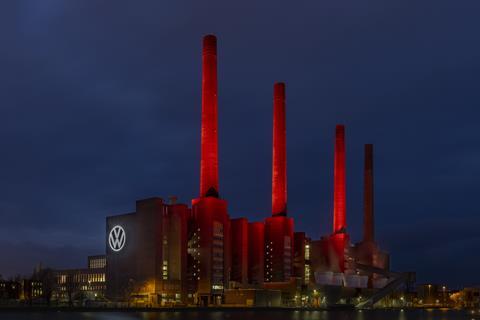
Notably, in that very same annual report, Volkswagen also calls for “more flexible” climate policy in Europe.
The two seemingly opposing positions have raised eyebrows in some corners.
Shareholder engagement group EOS, which co-leads Climate Action 100+’s engagement with Volkswagen, recently told the media the disclosures “raise questions” about the firm’s alignment with climate objectives.
However, Volkswagen’s spokesperson insisted that “the transition to decarbonised mobility is deeply rooted in our company’s strategy”.
The problem is that weak consumer demand leaves carmakers facing “multi-billion-euro fines” for not meeting the EU’s 2030 regulatory thresholds goals for low-carbon fleets.
As a result, it’s “advocating for a realistic and hence flexible regulative framework to get there”.
CEPB, the other lead on Volkswagen under Climate Action 100+, did not respond to multiple requests for comment about whether the firm’s position was compatible with the pension fund’s expectations on lobbying.
Europe’s decision to cull its sustainability disclosure rules, and current attempts to convince policymakers to dilute the EU Emissions Trading System, are clear indications that businesses are feeling emboldened when it comes to publicly campaigning against climate accountability measures.
But some are being more vocal about their support for the rules, too.
In just the last four weeks, hundreds of issuers, including big names like Nestlé, EDF, Holcim and Unilever, have signed statements urging European lawmakers not to row back on their green laws in the face of pressure from industry.
“Time will tell where this leads,” says AP7’s Floren.
“I believe that both asset owners and managers are looking for new ways forward for their engagement in sustainability issues in the wake of the dramatically changed conditions in the world.”










.jpg)