
Nearly half of Europe’s assets under management are now run by US investment houses.
That’s according to research published last week by Brussels-based think tank Breugel, which found that the share of US asset managers had increased from 40% in 2021 to 47% in 2026.
The jump has been driven by a combination of organic growth and the acquisitions of UK and European managers.
Just yesterday, more than 99% of shareholders in British house Schroder’s approved its sale to US manager Nuveen.
Dutch firm NN Investment Partners now belongs to Goldman Sachs, and Insight Investment is part of BNY.
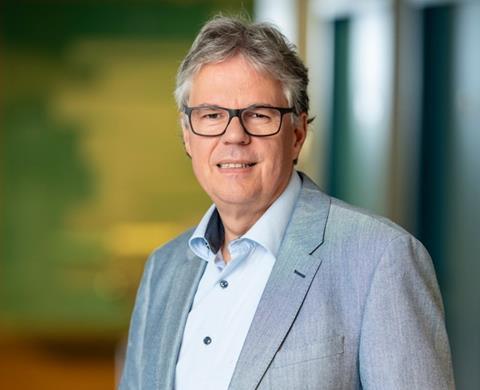
Dirk Schoenmaker, the Bruegel fellow behind the new research, says “asset owners have to take some responsibility” when it comes to the managers they’re selecting to run their money.
“They shouldn’t be surprised if they put all their mandates with US managers today, and there are no European managers left tomorrow,” he warns.
Corporate culture and sustainability
But it’s not protectionism that should drive a rethink, says Schoenmaker, who is also a professor of finance at Erasmus University.
“Countries like the UK, the Netherlands and Denmark have built up these strong pension systems with a focus on the long-term economic and societal objectives of the region,” he points out.
“It’s a pity to see those funds hand their capital over to managers that don’t allocate it with that in mind.”
Indeed, research published by Morningstar this week confirmed just how vast the gap between US and European managers has grown when it comes to their expectations on corporate sustainability.
The data house looked at how asset managers on both sides of the Atlantic voted on key shareholder proposals addressing environmental and social themes over the past three proxy years. Among the 20 US managers included in the assessment, Morningstar found average support had fallen by 11 percentage points to 31%.
Among a similar sample of 18 European managers, there had been just a 3-percentage-point drop in support for key proposals over the same period, to 91%.
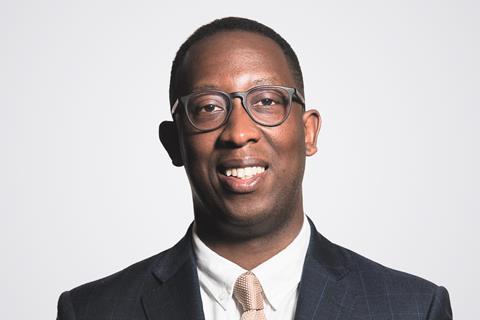
“Proxy voting has traditionally offered investors a useful window into asset managers’ sustainability priorities,” says Lindsey Stewart, director of institutional investor content at Morningstar.
“What we’re seeing now is not just a shift in voting behaviour, but a shrinking set of resolutions that generate enough support to send a clear signal at all.”
This leaves analysts like Stewart with less proxy-voting data to study, but even then, he says, “clear differences in intentionality between European and US asset managers on sustainability are still highly visible”.
The reduction in support among US asset managers could be seen across both environmental and social topics.
For socially-focused requests (excluding lobbying proposals), support tumbled from 40% to 26% over the three years. Even among dedicated ‘sustainable’ funds in the US, it fell from 70% to 58%.
“We think it is likely that political and regulatory actions in the US in 2025 had the effect of curtailing sustainability- and human capital-related engagement by some US asset managers,” notes Morningstar.
Schoenmaker says that, even if European asset owners can mandate US managers to vote their own shares in a particular way, “it’s hard to call yourself credible if you accept that the rest of that manager’s shares are voted differently”.

And, with Europe’s ever-shrinking universe of listed companies being increasingly subject to US proxy-voting decisions, the stakes are potentially very high.
“There is a risk that European corporate culture will be shaped by the US if we don’t address this trend,” warns Schoenmaker.
Tsvetelina Kuzmanova, finance and policy specialist for the Cambridge Institute for Sustainability Leadership, agrees.
“Asset managers shape corporate behaviour, governance, and ultimately the direction of the economy,” she tells IPE, adding that the growing presence of US investment houses in Europe “is hard to ignore”.
“Europe is quietly losing control over how its capital is allocated,” says Kuzmanova — a particular problem given the growing divergence in sentiment about mitigating climate change.
“If it wants to finance its transition on its own terms, it cannot afford to be indifferent to who is allocating its capital, and how.”