





At the end of June, Keir Starmer resigned as UK prime minister, with newly elected Makerfield MP Andy Burnham expected to succeed him.
Burnham has set out a programme aimed at improving living standards and restoring trust in politics through what he described as “the biggest rebalancing of power our country has ever seen”.
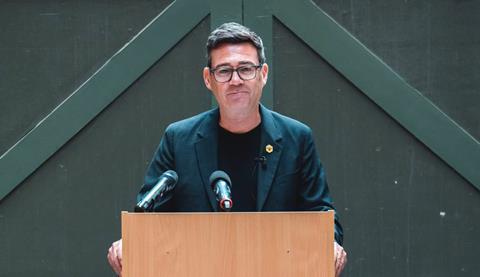
He has pledged to adhere to chancellor Rachel Reeves’s fiscal rules, despite previously arguing the UK was “in hock” to bond markets. At the same time, he has committed to expanding council housing, increasing defence spending and bringing key industries, including water and rail, back into public ownership.
Commentators have particularly welcomed Burnham’s emphasis on public and private investment working together to support innovation and economic growth.
Michael Moore, chief executive officer of the British Private Equity & Venture Capital Association (BVCA), said: “Private capital has a vital role to play in every nation and region of the UK, backing businesses, unlocking investment and helping local economies realise their full potential.
“By bringing decision-making closer to the communities it affects, and by strengthening partnerships between local leaders, businesses and private capital, investors such as our members can help more scale-up businesses and innovative spin-outs across the country grow and commercialise their ideas.”
He noted that such focus on “place-based collaboration and investment as a baseline for the UK economy presents a serious new opportunity for building a more dynamic and growing economy”.
LGPS pooling
Away from Westminster, the government has published long-awaited guidance confirming a significant transfer of investment decision-making from Local Government Pension Scheme (LGPS) administering authorities to their FCA-authorised asset pools, while making clear that funds will retain responsibility for oversight and governance.
The guidance provides further detail on how responsibilities will be divided as the government’s pooling reforms are implemented.
Administering authorities will continue to set investment strategy and remain accountable for delivering members’ benefits, but a broad range of investment implementation decisions will increasingly be delegated to the pools.
The guidance also makes clear that administering authorities are expected to maintain robust oversight of their pools, monitoring performance and holding them to account while recognising that day-to-day investment decisions have been delegated under the new governance framework.
DB surplus release
The government has also published draft regulations allowing defined benefit (DB) pension schemes to release surplus assets once they are fully funded on a low-dependency basis, a move consultants say could encourage more schemes to run on rather than pursue immediate insurance buyouts.
Under the proposals, surplus payments would be permitted where a scheme is fully funded on a low-dependency basis and is expected to remain so. Conditions include actuarial certification of the funding position, employer consent and notification to members before any payment is made.
The government will consult over the next three months on the conditions schemes must meet before surplus can be released to sponsoring employers or used for members’ benefit.
Items to note:
- The IPE Conference & Awards 2026 is taking place on 2 December at the Royal College of Physicians & Natural History Museum in London.
Pamela Kokoszka
UK Correspondent
This newsletter was emailed to readers earlier in the week. If you would like to receive it regularly, on your IPE profile, go to My Newsletters and select any from the list










.jpg)