



New draft guidance from DWP sets out a common-sense, proportionate understanding of what trustees can consider when facing complex risks that span generations
I was just getting into my stride as an investment manager at the Environment Agency Pension Fund in 2008, a year that left an indelible mark on me, on the financial system and on society. The lessons were stark. UBS told its shareholders that nearly $19bn of write-downs stemmed from too much emphasis on revenue and growth, and too little attention to risk. Everywhere, decision-makers set up inquiries asking how so many warning signals had gone unheeded. Even Alan Greenspan conceded that he had placed too much faith in the self-correcting power of free markets.
For global finance, are we about to face another such “moment of truth”?
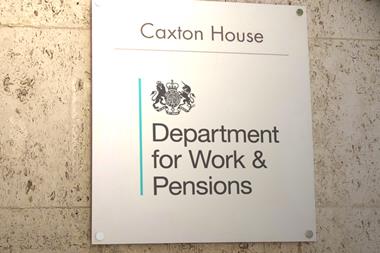
Draft guidance from the Department for Work and Pensions (DWP), published yesterday, provides a crucial toolkit for trustees to navigate this moment. Challenging the assumption that short-term market performance should take priority, and recognising that true return or performance “will include the income or gain and the consequences of that income or gain”, it provides a necessary corrective for an age of transformative risk and opportunity, establishing a holistic approach towards fiduciary duty.
Last month, senior insurance professionals published an anonymous memo warning that catastrophe modellers are being pressed to “manage down the numbers” on climate risk, and that the industry’s retreat from high-risk areas is already underway.
The financial consequences are not hard to trace. In the US, insurers issued more than two million non-renewals in 2024, up 61% in a year, and research from NYU Stern links each one-point rise in non-renewals to an 8.3% fall in local home values. Where insurance retreats, losses pass to property owners, lenders and governments, then ripple through to asset values, public finances and inflation. The memo’s authors called on pension funds to scrutinise their exposure. For a fund invested across the whole economy, there is no realistic way to keep those losses “off the books”.
Trustees understand solvency. Through many triennial valuations at EAPF, I saw how it sits at the heart of each assessment: can the fund meet its promises to members, today and decades from now? The Planetary Solvency work I have supported, led by the Institute and Faculty of Actuaries and the University of Exeter, asks the same question of the system we all depend on. Its latest report, Parasol Lost, finds warming is now likely to pass 2°C before 2050. Where earlier economic models put the cost of 3°C at around 2% of global GDP, analysis now suggests a severe climate and nature shock could plausibly shrink global GDP by 15 to 20%. A market-led response alone will not manage that risk. A fund can be well governed and its portfolio well constructed, and still fail its members if the system it relies on does not hold.
War, technology, the energy transition, ecosystem decline and shifting geopolitical power are reshaping the world at once, long before risk models can capture the timing or the effect on returns. It has never been a more challenging time to be a pension fund trustee, and this guidance could not be more timely.
Crucially, while supported by HM Government, the guidance has been industry-led. That matters. It has been shaped by people who run pension funds, which is why it is proportionate for funds of all shapes and sizes. It is explicit that it introduces no new duties or obligations, and it does not expect every fund to pursue every recommendation. Instead, it seeks to provide “clarity in and confidence about what the law in practice requires and permits in today’s circumstances”.
That clarity frees trustees to make difficult decisions, including those that factor in indirect or uncertain impacts, or impacts that are known but poorly quantified. It accepts that prudent decisions may “embrace the idea of increased short-term cost, or reduced return in the short-term, for longer-term benefit or future opportunity”. Such a position is not easy to take, but it will often be the wise one.

At this fork in the road, trustees deserve not only the freedom to apply common sense, but the confidence that it is expected of them
Some funds already work this way. PGGM’s 3D approach builds risk, return and impact into investment decisions, and a number of LGPS funds and pools have led the way here in the UK. The guidance should give others the confidence to follow.
It also recognises collaboration as an effective way to tackle system-wide issues, pooling knowledge and influence to create something greater than the sum of the parts. Initiatives such as the Principles for Responsible Investment and the Institutional Investors Group on Climate Change, which I chair, give pension funds a cost-effective route to address the major financial questions of our time.
We cannot know how different our world might look had earlier risks been factored into the calculus. But from the vantage point of 2026, we can see both the opportunity and the imperative to do so now.
The next step is to give this guidance statutory footing. That would not create new duties, but it would give trustees, advisers and regulators a shared and durable reference point, reducing the burden of weighing competing forces without a clear map. At this fork in the road, trustees deserve not only the freedom to apply common sense, but the confidence that it is expected of them.
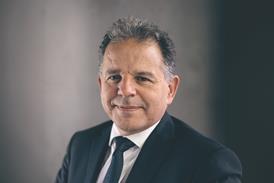
Faith Ward is chair of the Institutional Investors Group on Climate Change (IIGCC) and a senior strategic adviser to the LPPI, People’s Pension and on the advisory board of The Clean Growth Fund. Until June 2026, she served as chief responsible investment officer of Brunel Pension Partnership