
Dutch pension funds have started to reconsider their often oversized exposures to the US, as well as their relationships with US asset managers. Pensioenfonds Bisdommen, the pension fund for Catholic clergy, has capped its exposure to US equity at 50%.
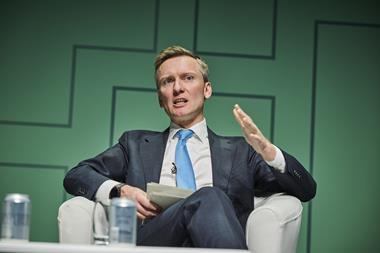
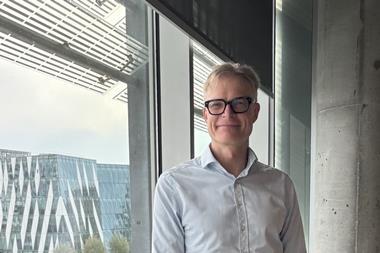
“We have recently decided to actively reduce our exposure to the US from 60% of the equity portfolio to 50%,” said Hans Peters, a trustee at Pensioenfonds Bisdommen at a pension congress in Rotterdam on Tuesday, organised by IPE’s Dutch sister publication Pensioen Pro.
“We have implemented a rule that says one single region cannot constitute more than 50% of our equity portfolio,” he added.
“This has of course been initiated by what’s happening in the US. We see that Trump’s policies undermine the strength of the US economy. If you see that happen, you have the fiduciary duty as a pension fund to respond to it,” said Peters, noting that index weightings are not a given and can change over time.
“Japan once was 40% of the index too,” he continued.
Pensioenfonds Bisdommen, which has €543m in assets under management, invests passively in a Paris-aligned index fund, and has asked its fiduciary manager Goldman Sachs Asset Management to implement the changes.
The pension fund for the Dutch clergy is not the only scheme to reconsider its exposure to the US. In a recent ESG survey conducted by Pensioen Pro, around 40% of pension fund respondents (partly) agreed to the statement: “Investing in the US is increasingly at odds with our ESG policy”.
This attitude is, for now, mostly reflected in reduced appetite to invest in private assets in the US.
A survey by consultancy Hodes Weill & Associates showed earlier this year that European pension funds no longer want to commit new money to infrastructure investments in the US, for example.
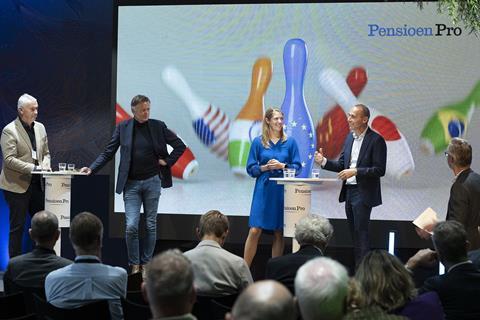
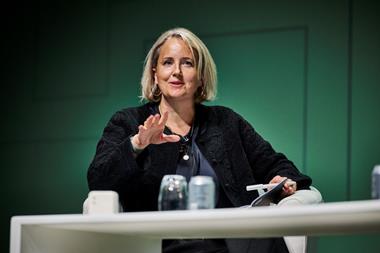
Multi-sector fund PGB is also considering this move, said Anne Kock, a trustee at the fund who spoke at a panel debate at the Pensioen Pro event.
“While we are not planning any changes to our listed portfolio, we are concentrating on Europe for new non-listed investments because these must be impact investments,” she said. “We want to focus on investments that are relevant to our members, and see more opportunities for this in Europe.”
US asset manager under scrutiny
US asset managers are also facing questions from Dutch pension funds as they are seen to be weakening their ESG policies under political and legal pressure.
“We saw before that asset managers in the US were adopting ambitious ESG policies, but this has clearly changed,” said Peter Ferket, a trustee at healthcare sector scheme PFZW responsible for investments.
“We want like-minded asset managers who think the same about risk-return and sustainability as we do. It has become easier to find such managers in Europe than in the US,” added Ferket, also speaking at the same panel discussion.
PFZW ditched BlackRock as its asset manager as part of a recent overhaul of its investment strategy.
The Pensioen Pro survey shows, however, that only 17% of pension funds no longer want to work with US asset managers, which have seen their ESG policies weaken under political pressure. Most pension funds indeed stick to their guns, such as SPMS, the fund for medical specialists, appointing BlackRock as its fiduciary manager.
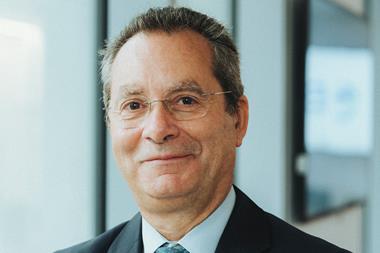
“BlackRock has a lot of different pension funds as clients. They can implement a very green investment policy or tell a very conservative story, depending on their client’s preference,” said SPMS director Jacques van Dijken. “This works fine for us, and we’re happy with the services they provide to us.”
The latest digital edition of IPE’s magazine is now available