
Pension investors should maintain a long-term perspective and ensure clear communication with trustees when navigating periods of market volatility, industry leaders said.
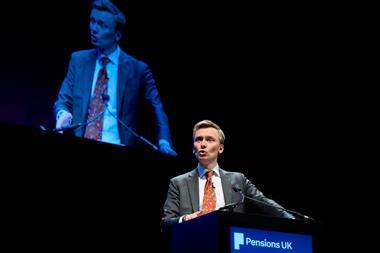
Speaking at the Pensions UK conference in Edinburgh on Tuesday, Joe McDonnell, chief investment officer at Border to Coast Pensions Partnership, said the investment pool’s asset allocation committee has been meeting “more frequently” following the escalation of conflict in the Middle East.
He added that the investment industry faces several overlapping structural risks beyond geopolitical tensions, including civil war, artificial intelligence, and liquidity concerns.
“I don’t know in the medium to long term which of those three will actually be the dominant theme, but our asset allocation committee has met more frequently over the last couple of weeks. We’re looking at a range of risk metrics to get comfortable.”
McDonnell said the current market environment does not constitute “what I would consider a market correction, but it is something we have to be concerned about”.
He added that Border to Coast’s asset allocation team is carrying out scenario analysis to assess “how bad things can get”, but stressed that the pool is not making any portfolio changes at present.
Dan Mikulskis, chief investment officer at People’s Partnership, said uncertainty is an inherent feature of markets.
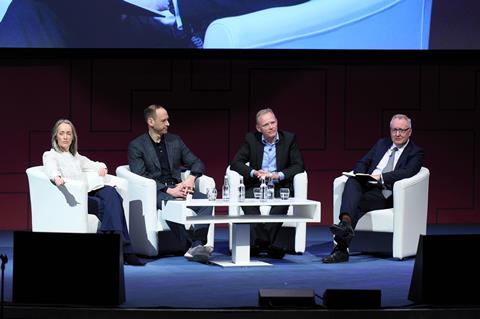
“Volatility is always a feature of markets. It always feels uncertain when you’re in the moment. But I am not sure that’s actually really true,” he said, adding that volatility should be “embraced”.
“That’s why you earn excess return on taking risk,” Mikulskis told conference delegates.
He added that strong investment processes and systems are essential to navigating periods of turbulence “sensibly”.
“Industry could spend a little bit more time thinking about that now we’ve got a slightly bigger group of large asset owners,” he continued.
Mikulskis said clear delegation from stakeholders is also critical. In the case of People’s Partnership, he noted that well-defined mandates from the trustee help investment teams understand the limits of their authority and when to seek further approval.
Mads Gosvig, chief officer for pensions investment management at Railpen, said the organisation also takes a “very long-term view” supported by strong governance.
“We are blessed with a very strong trustee board that knows that we are there for the long term. Panic is not necessarily something that pops up, which means that we can essentially invest for the long term,” he told the conference.
He added that long-term investing requires robust organisational processes to respond when needed.
“That doesn’t come on its own. We have processes in the organisation to run the investment, to be prepared if we need to do something, be ready to seize the opportunities that pop up in most crises that will appear,” Gosvig said.