
A new expert panel set up by the Norwegian government to advise on managing the country’s giant sovereign wealth fund has come out with recommendations that could lead to big changes in the Government Pension Fund Global’s (GPFG) current asset mix, advising rethinks on its heavy technology-sector weightings as well as criteria for including sovereign bonds.
The Expert Council for the GPFG was appointed by the Ministry of Finance last year, according to the ministry, “to provide professional advice and assessments on the fund’s investment strategy, the framework for responsible management and the follow-up by Norges Bank”.
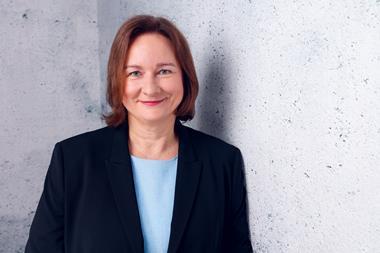
The body’s three members, Karen Helene Ulltveit-Moe, Harald Magnus Andreassen and Magnus Dahlquist, presented their first report yesterday, with seven main recommendations.
These included that “monitoring concentration at sector level should be prioritised”, and that the government should “conduct a comprehensive audit of the bond index, including segments, weighting and duration, and assess whether sovereign financial risk should be in the bond index or in active management”.
Ulltveit-Moe is professor of economics at the University of Oslo, while Andreassen is chief economist at Sparebank 1 Markets, and Dahlquist is professor of finance at the Stockholm School of Economics.
Other recommendations were that the fund’s financial objectives and role both in and outside Norway should be emphasised, and that geopolitical risk should be managed with continued broad geographical diversification, but with “strengthened preparedness”.
In the broad report, which addressed fundamental issues and risks around the existence of the fund as well as analysis of market indices used for its asset allocation, the trio focused on geopolitical tension and political risk, saying: “We expect new geopolitical tensions and conflicts to arise, which could lead to new sanctions, restrictions or other measures that could cause losses to the fund.”
In a column in Norwegian business daily DN also published yesterday, Ulltveit-Moe and her co-authors wrote: “The fund was established on the back of a wave of globalisation driven by freer trade and increasingly integrated capital markets – and a rules-based world order.”
“Today’s world has begun to move in reverse. It is too early to say what consequences this will have for the fund. But there is little doubt that new times can present new challenges for the fund,” they wrote.
Regarding the recommendation to monitor the fund’s sector concentration risk, the council said parallels had been drawn between the big increase in US technology company valuations of recent years and the IT bubble at the turn of the millennium.
“The Council believes that risks related to high concentration and valuation in the US stock market are examples of factors that should be prioritised in risk measurement and management”
“The Council believes that risks related to high concentration and valuation in the US stock market are examples of factors that should be prioritised in risk measurement and management, and that it should be assessed whether the current model is sufficiently suitable to handle such risks,” the report said.
Regarding the GPFG’s fixed income investments, which made up 27% of the NOK19.6trn (€1.69trn) fund at the end of June last year, the experts said there was a significant element of tailoring in the bond index and the main features of the index had remained fixed since 2012.
“In light of this, the Council believes that it is time to assess whether the assumptions underlying the adjustments to the index are still relevant, and whether the structure meets the purpose and other considerations in an appropriate manner,” they added.
A review of the bond index should be based on a comprehensive assessment of the composition of the benchmark index, including the proportion of stocks and bonds, and take as its starting point the roles the bond index should play in the total portfolio, they said.
“The allocation between stocks and bonds was last assessed in 2017 and the fund has since more than doubled in value,” they said, adding that given these roles, it should be assessed whether the segments included and their weighting could still be said to be consistent with that.
“For example, it should be assessed whether GDP weighting still provides a good spread of risk related to the ability and willingness of governments to service their debt,” the experts said.
Raising the possibility that the GPFG could add US mortgage bonds to its bond mix, the report said it should be considered “whether simplicity in itself is such an important principle that it should lead to the exclusion of large bond markets with significant premiums from the index”, which the experts said was currently the case for US mortgage bonds.