

Last week’s move by Norway’s finance minister Jens Stoltenberg to spearhead a thorough overhaul of the sovereign wealth fund’s ethical investment rules was a bold step that keeps the oil fund on course as a broadly-diversified, financial investor, according to leading academics.
On Friday, the government put temporary ethical investment rules for the Government Pension Fund Global (GPFG) in place, pending a year-long independent review of the old rules after a parliamentary vote, partly because of the risk the fund would be forced to divest some of its largest technology holdings.
Espen Henriksen, a finance faculty member at BI Norwegian Business School in Oslo, described the move as an “impressive” effort by Stoltenberg to ensure that the fund maintains high, robust, and operationalisable ethical standards while at the same time defending the economics of its asset-management model and its institutional integrity.
“In marked contrast to Tangen [Norges Bank Investment Management (NBIM) chief executive officer Nicolai Tangen], Stoltenberg has repeatedly and clearly emphasised that the fund is managed as an index fund, and that its success stems from that approach,” he told IPE.
Henriksen outlined the three pillars of the sovereign wealth fund’s investment strategy as: (a) broad and efficient diversification, (b) economies of scale, and (c) investment in transparent public markets.
“The index-hugging success formula simply cannot coexist with massive, arbitrary exclusions,” he said, adding that with such exclusions the fund would lose both its broad and efficient diversification and its ability to exploit economies of scale.

He added that Stoltenberg appeared to have realised, following first the activist debacle in August over Norges Bank’s active mandates in Israel, and then the bank’s exclusion of the US firm Caterpillar, that decisive action was needed to preserve the fund’s institutional integrity and the economics of its investment strategy.
“The fund must, of course, have ethical guidelines,” Henriksen said. “But these must be generalisable — capable of being applied consistently as universal principles — and grounded in a sound understanding of how financial markets work.”
“Without more coherent guidelines, activists could use the fund in every new crisis for attention-seeking and moral grandstanding, and Norway would lose what has made it credible,” he said.
Stoltenberg was both raising and lowering the bar for exclusions, Henriksen said.
“He’s raising the bar to avoid case-specific exclusions like Caterpillar, which are not generalisable, and which, taken to their logical conclusion, could potentially exclude a large chunk of the global stock market,” he noted.

“But at the same time, he’s signalling that Norges Bank should never have had active, speculative mandates in Israel during the war, and that it must not happen again,” he said.
“Stoltenberg seems to have chosen to put sound long-term fiscal policy and institutional integrity above short-term politics and his party’s political convenience. He deserves real credit for that,” Henriksen continued.
Karin Thorburn, professor of finance at NHH Norwegian School of Economics in Bergen said she believed the Storting had made the right decision to pause exclusion recommendations from the Council on Ethics and to review the ethical guidelines.
“I was quite concerned earlier this fall when NBIM announced that the fund had divested from a large number of Israeli companies, as well as from Caterpillar,” she told IPE, adding that the US reaction to the exclusion of Caterpillar underscored how political decisions like this were perceived abroad.
“Sensitive foreign policy decisions – such as excluding entire countries from the portfolio – should be made where they belong: By the government, not by NBIM or the Ethics Committee,” she noted.
“There is a striking double standard in continuing to buy from Caterpillar and to rely on NATO’s nuclear shield, while refusing to hold shares in the companies behind them,” she said.
“Moreover, it is hard to argue that it is more ethical to let someone else own these companies than to try to influence their practices as a responsible shareholder,” Thorburn remarked.
The NHH professor said it had become obvious when the Council on Ethics began considering reviews of large technology companies, such as Apple, Microsoft, Alphabet, Meta, and Amazon, that the exclusions could fundamentally alter the GPFG’s successful investment strategy as a broadly diversified, essentially passive, global index fund.
“This highlighted the risk of sacrificing future expected returns in exchange for a debatable moral standard today,” she said, adding that since the fund bought shares in the secondary market, it did not finance companies’ operations.
“It seems Stoltenberg realised that the fund was heading down a slippery slope, risking no longer being viewed as a purely financial investment vehicle,” she said.
“It seems Stoltenberg realised that the fund was heading down a slippery slope, risking no longer being viewed as a purely financial investment vehicle”
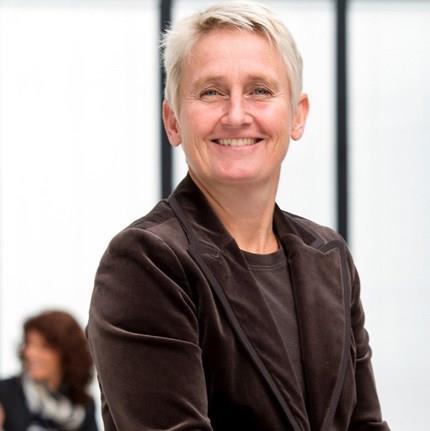
Karin Thorburn at NHH Norwegian School of Economics
“Hopefully, the expert group reviewing the ethical guidelines recognises the trade-offs between ethics and expected returns, and can propose a sensible middle ground that satisfies political demands without undermining the fund’s performance and imposing foreign policy risk,” said Thorburn.
Meanwhile, the changes are being followed with interest in the Norwegian investment management sector, away from NBIM.
Kamil Zabielski, head of sustainable investment at Storebrand, commented: “Given the current state of the world, it is wise to review one’s guidelines to consider what should be preserved and what should be developed.
“We understand that investors regularly discuss and reassess their policies and working methods. It is part of standard practice that most investors do whether they are public or private,” he said.
At Gabler Investments, Guro Elgheim Sivertsen, head of ESG and sustainability, warned in a column in Norwegian newspaper DN that the industry should not interpret the fact that GPFG’s ethical guidelines were being revised as a step backwards for responsibility and sustainability.
“Many Norwegian institutional investors and asset managers have chosen to follow the same exclusion criteria as the Oil Fund as part of their work with responsible investments,” she wrote.
The Council on Ethics was a kind of double-edged sword for the industry in Norway, she said, because while it was a privilege for smaller institutional investors to have a professional body making assessments, its existence had also become a cushion, with some seeing following its exclusion list as sufficiently responsible practice.
“So perhaps this is a good opportunity for more people to look at their own practice related to responsible investments,” Elgheim Sivertsen suggested.
Read the digital edition of IPE’s latest magazine









.jpg)