




Norway today unveiled a set of temporary ethical investment rules for its vast sovereign wealth fund (SWF), after earlier this week suspending the established code, partly because the old rules risked forcing the fund out of some of its largest technology holdings.
The government said the King in Council had today appointed a public committee tasked with evaluating the ethical framework and other aspects relating to the responsible management of the NOK21trn (€1.8trn) Government Pension Fund Global (GPFG).
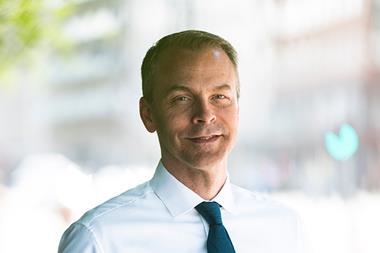
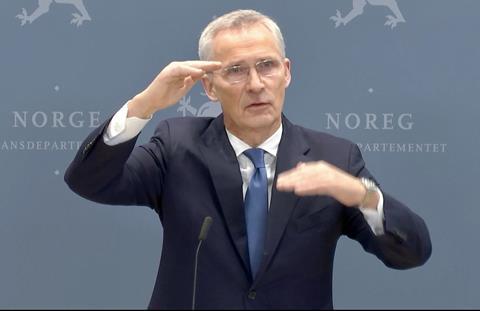
Jens Stoltenberg, Norway’s finance minister, said: “This review is necessary to safeguard the pension fund and key considerations. We must find a balance between the principles the fund is meant to uphold,” adding that the committee had important work ahead.
This summer, a furore erupted around the SWF because of its investment in companies linked to Israel’s war in Gaza as well as its occupation of the West Bank, which led to a hasty series of divestments, including the exclusion of the major US company Caterpillar — with the latter drawing disapproval from the US State Department.
On Tuesday, the Norwegian parliament voted in favour of a number of government proposals on the management of the GPFG, based on action that Stoltenberg had argued in a 23 October speech was necessary to preserve the fund’s nature as a financial investor, while living up to Norway’s international obligations.
Parliament told the government to ensure the GPFG continued as a broadly diversified, global fund, with the aim of achieving the highest possible return at an acceptable risk, also requesting the government to review the fund’s ethical framework.
They also voted for the GPFG’s Council on Ethics to suspend recommendations on observation and exclusion, and for Norges Bank – which manages the fund via Norges Bank Investment Management (NBIM) – to hold off making decisions based on the old guidelines until a new ethical framework has been decided.
“In line with the Parliament’s decision, the Ministry of Finance has established temporary ethical guidelines and made changes to the management mandate that will apply until a new ethical framework is in place,” the government said today, adding that the Council on Ethics and Norges Bank had been informed of this via letter.
In Stoltenberg’s October speech, he said Norway was now facing “the most serious security situation since World War II”, with increasing great power rivalry in the world, weakening trust in international institutions, and norms for cooperation being undermined.
“This review is necessary to safeguard the pension fund and key considerations”
Jens Stoltenberg, Norway’s finance minister
Such changes challenged the GPFG’s framework in several ways, he said, adding that the distinction between military and civilian technology was blurring, with AI, space technology and data analysis central to modern warfare, as it was to society at large.
He said a large number of companies were alleged by “civil society and other actors” to have contributed to Israel’s illegal occupation and the warfare in Gaza, and that the UN Special Rapporteur on the Occupied Palestinian Territories “points to some of the world’s largest companies, such as Microsoft, Alphabet and Amazon in her report”.
“Earlier this year, the Council on Ethics wrote that they had several technology companies under investigation related to the criteria for human rights, and war and conflict,” Stoltenberg said.
“If the pension fund cannot invest in such businesses, it could change the fund’s fundamental characteristics. A fund that cannot be invested in the world’s largest companies can hardly remain a global index fund,” he said in the October speech.
The GPFG is heavily invested in big technology companies, which make up its top six equity holdings and, at the end of June, accounted for around 10% of the SWF’s value.
Read the digital edition of IPE’s latest magazine