
Three of the European Union’s smaller countries, Norway, Ireland and Denmark, have risen in the latest global ranking of nations based on retirement security, while Switzerland and Iceland have slipped — with all five countries nevertheless remaining high in the new league table.
In the Natixis 2025 Global Retirement Index, Norway stands at number one in a ranking which takes into account factors such as retirement finances, material wellbeing, health and quality of life, with Ireland in second place and Switzerland in third.
That compares with the 2024 ranking by Natixis Investment Management, in which Switzerland, Norway and Iceland came in at numbers one, two and three, respectively.
Dave Goodsell, executive director of Natixis Centre for Investor Insight, said: “Norway has regained the top position in the 2025 Natixis Global Retirement Index, driven by its strong performance in health outcomes, low unemployment and high-income equality.”
“Ireland surges to second place, thanks to improvements in inflation and an economic environment that supports retirement security,” he said in the news release this week.
The asset management firm, which has been producing the annual ranking since 2012 using metrics such as life expectancy, income per capita, environmental quality, and government debt, said its survey gave a “multi-dimensional view of how well countries are positioned to support ageing populations”.
Norway has consistently been among the top three countries since 2012, while Switzerland and Iceland have also been near the top each year, Natixis said, adding that this underscored the advantages smaller countries had in their ability to reach consensus on key issues affecting retirees.
However, rankings for some other countries had varied over the years, it said.
“Over time, factors as varied as growing national debt, rising inflation, and low interest rates have had a significant impact on year-over-year rankings,” Goodsell said.
Among larger developed countries in the ranking, Canada showed the steepest decline between the years, falling to 20th place in 2025 from 13th in 2024, with its score dragged down, Natixis said, by a rise in unemployment.
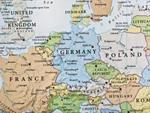
The UK and Germany, meanwhile, remained at positions 14 and eight, respectively, in 2025 versus 2024.
Goodsell said retirement security could pose greater challenges for developed countries with large populations, with bigger countries often carrying significant public debt, which could affect public pensions.
“Income inequality can also be greater thanks to more diverse populations, while broader exposure to the global economy can sometimes result in labour market volatility,” he said.
Read the digital edition of IPE’s latest magazine