




Norges Bank Investment Management (NBIM) has drawn attention to increased risks around a potential market correction of artificial intelligence (AI) technology-related stock prices, which could severely dent the value of the NOK21trn sovereign wealth fund it manages.
Reporting its 2025 key results this morning, the central bank division said the Government Pension Fund Global (GPFG) had produced a 15.1% return last year, with equities having generated 19.3%, fixed income 5.4%, unlisted real estate 4.4% and the smallest asset class – unlisted renewable energy infrastructure – having returned 18.1%.
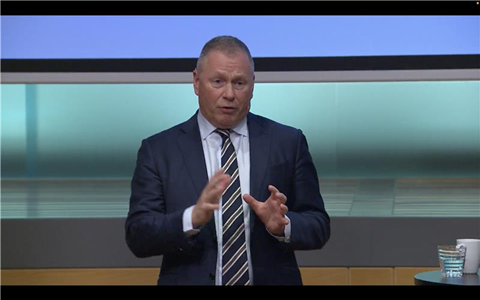
Nicolai Tangen, NBIM’s chief executive officer, said: “The fund delivered very strong results in 2025. Stocks in technology, financials and basic materials stood out, making a significant contribution to the overall return.”
At the same time, NBIM published its latest set of stress tests, identifying and analysing scenarios believed to be realistic and which could have very severe impacts on the fund.
Those scenarios are AI correction, fragmented world, regional debt crisis, and extreme weather events, and in its hypothetical scenario impact for the GPFG, NBIM estimated an AI correction would have the largest impact on the fund’s equities – wiping out 53% of their value – and would dent the fund as a whole by 35%.
The “fragmented world” scenario – in which “the challenging geopolitical environment leads to sweeping tariffs followed by widespread retaliation” according to NBIM – is estimated by the investment manager to potentially reduce the fund’s value by 37%.
NBIM said that since its previous annual stress testing, the AI buildup had intensified, and consequently, the scenario was more severe.
“Market concentration has increased, and AI-related capital expenditure has grown large and concentrated. If AI capex fails to deliver productivity gains, growth expectations could revert sharply,” the manager wrote in the document.
Tangen said at today’s press conference in Oslo that it was very difficult to gauge right now whether there was an AI bubble, but that in any case, NBIM could not simply sell out of the AI companies.
“There is no strong view on technology. I just think AI – it’s incredible what it does for productivity,”
Nicolai Tangen, NBIM’s chief executive officer
The GPFG’s eight largest equity holdings are technology stocks, and at the end of 2025, made up 20% of the entire fund, according to the latest figures.
Tangen said: “We do not have that kind of risk budget, so if something happens with the portfolio it would happen through the mandate and a wish to be diversified in a different way,” he said, adding: “There is now a process going on around this,” referring to the recommendations from the GPFG’s new expert council to government on the management of the SWF.
Tangen said AI companies taking on debt was a “new phenomenon”.
Asked whether one should worry about a large fall this year in AI stocks, the CEO said one should worry about all the factors highlighted in NBIM’s stress test.
“You should worry about a fragmented world, you should worry about debt levels generally among large countries and we should worry about the fact that a lot of the value of the fund is tied into the value of these stocks,” Tangen noted.
NBIM did not currently have an overall position on technology stocks, he said, and was “relatively equal weight” on the sector.
“There is no strong view on technology. I just think AI – it’s incredible what it does for productivity,” Tangen said, adding that Norway was the perfect place to put AI into everything one did.