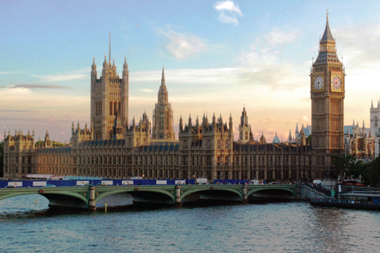
Members of the UK’s upper house have warned that government plans to force pension funds to grow or consolidate could stifle innovation.
During the fifth day of scrutiny by the House of Lords’ grand committee of the Pension Schemes Bill, debate focused on clause 40, which sets a £25bn asset threshold for main scale default arrangements in defined contribution (DC) workplace schemes, with the aim of forcing consolidation into fewer, much larger funds.
The government argues that scale delivers better governance, lower costs and improved access to productive investment, ultimately benefiting savers. However, members of the House of Lords challenged this, arguing that size alone is not a reliable indicator of quality or performance.
Introducing amendments to exempt high-performing schemes from the scale test, Sheila Noakes (Baroness Noakes) said the government was displaying “an obsession with size that overrides their professed desire for better outcomes for savers”.
She warned that “good investment returns are not the exclusive preserve of schemes that reach the magic £25bn of assets”, adding that the evidence cited by ministers showed only correlation, “not that good returns are obtained only by those which pass the size threshold”.
She also accused the government of attempting to use pension reform to meet wider economic objectives.
She said: “One instrument – mandating the size of pension providers – will not achieve the separate targets of improving savers’ outcomes and increasing UK productive investment.”
Former pensions minister Ros Altmann (Baroness Altmann) echoed these concerns, criticising the decision to hardwire a specific monetary figure into primary legislation.
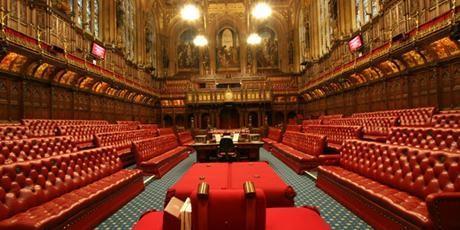
She said there was “no academic proof that £25bn, £10bn or any other number is the right dividing line between successful funds and failing funds”.
Warning of unintended consequences for newer entrants, she told the committee: “Just because they have not reached what the bill determines is the magic number should not mean that they are forced to close.”
Several peers highlighted the risk that consolidation could entrench large incumbents while eliminating innovative providers.
Lucy Neville-Rolfe (Baroness Neville-Rolfe) said that mergers “always have substantial costs” and argued that the bill risked eliminating “the next generation of innovation, real value creation and indeed British unicorn funds”.
John Fuller (Lord Fuller) called the government’s narrative that “bigger is best” a “lazy” one that suited existing players. He said: “Only this government could prefer an oligopoly over competition and badge it as good for pension scheme members.”
Drawing on his experience with the Local Government Pension Scheme (LGPS), Lord Fuller argued that scale could actually reduce investment in UK companies. He said: “The truth is that the largest schemes invest less in Britain, because they are just too big to invest in the smaller British companies with great growth potential.”
“The truth is that the largest schemes invest less in Britain, because they are just too big to invest in the smaller British companies with great growth potential”
Lord Fuller
Concerns were also raised that the Bill could force schemes into uniform investment strategies, increasing systemic risk. Lord Palmer of Childs Hill said there was “a strong question over whether size alone is a reliable proxy for value” and warned against “herding behaviour and systemic vulnerability”.
Responding for the government, Maeve Sherlock (Baroness Sherlock) minister of state in the Department for Work and Pensions, insisted that scale was essential to improving outcomes for the millions of disengaged savers enrolled by default.
She said: “Evidence suggests that there are direct benefits derived from scale; they include better governance and economies of scale […] and access to a wider range of assets.”
Baroness Sherlock maintained that the £25bn threshold was evidence-based, citing international studies showing that funds of this size invest “nearly double the level of private market investment compared to a £1bn fund”.
She rejected calls for exemptions, arguing that focusing on performance “at any point in time” could create instability, noting that “past investment performance is not a guarantee of future success”.
But the critics remained unconvinced. In closing the debate, Baroness Noakes said the government appeared unclear about its priorities, asking: “Is there a hierarchy of objectives in this bill? It is not clear to me that there is.”
She concluded that the scale requirements would need to return as a central issue at report stage before withdrawing the amendment.