




The head of Norway’s sovereign wealth fund insisted this morning that his management organisation was not at fault over a controversial Israeli investment, but admitted the Government Pension Fund Global’s (GPFG) framework had failed to some extent.
At a news conference, Nicolai Tangen, chief executive officer of Norges Bank Investment Management (NBIM), outlined the sweeping measures NBIM was taking around its Israeli investments, following last week’s political intervention amid a public outcry over the fund’s investment in Bet Shemesh Engines Holdings – when it transpired the company maintained fighter jets used to bomb Gaza.
The SWF has sold off 11 of the 61 Israeli stocks it holds – including Bet Shemesh – and is bringing the management of all Israeli investments in-house. It has also fired the three Israeli external managers it outsources to, NBIM announced in a statement yesterday.
That announcement was accompanied by a statement from Norwegian finance minister Jens Stoltenberg, who met with both NBIM and the GPFG’s Council on Ethics last week on the matter, calling the measures “important”.
“I am pleased that the bank has followed the request and acted quickly,” he said.
Tangen told today’s news conference: “The war in the Gaza Strip is a serious humanitarian crisis. The situation in the West Bank and in Gaza is getting worse and worse, and the warfare is leading to terrible suffering.”
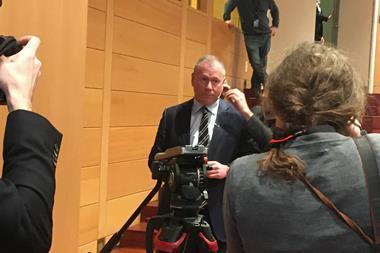
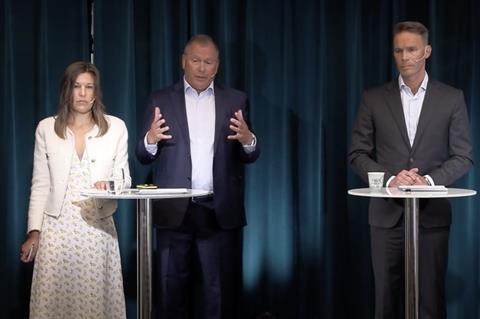
“Many have, against that background, asked questions about our management in Israel and individual investments in Israeli companies, and we can well understand that,” he said at the event being held in the Norwegian city of Arendal as part of the annual debating event there, which this year comes less than a month before a general election.
NBIM revealed that the GPFG had a total of NOK22.7bn (€1.9bn) invested in Israeli companies at the end of June, before the latest exits took place, but it did not disclose the value of those divestments.
It said the action taken regarding the Israeli investments reduced the complexity around their management, and it indicated more divestments could follow by saying that “further measures are expected”.
Tangen said there was a well-established framework for the management of the GPFG, which was thought to work well, and that, in addition, NBIM and the Council on Ethics had a range of processes they thought were good.
“But despite that, we have to admit that information has come to light that we should have caught up with,” the CEO said.
Some politicians have called for Tangen to resign over the Israeli investment scandal, but in an interview with Reuters today, Tangen ruled out stepping down, saying he had carried out the fund’s mandate, as decided by parliament.
He said “I haven’t even thought about it”, the news agency reported.
“We [at the fund] have not made any kind of formal mistakes. We have ended up in a situation that has been unfortunate, but we are executing on the mandate,” Tangen added.
Meanwhile, in financial results for January to June 2025 released this morning, NBIM reported a 5.7% return for the fund, with equities having generated 6.7% and fixed-income having produced 3.3%.
The year-to-date return bounced back in the second quarter from the 0.64% loss suffered between January and March, but it was nevertheless 0.05 percentage points below the GPFG’s benchmark return, according to the figures.
In absolute terms, though, the rising value of the Norwegian krone on foreign exchanges during the first six months of 2025 meant that the value of the fund fell by NOK156bn in the first half of the year, despite the NOK678bn positive return and inflows of NOK160bn, NBIM reported.
Read the digital edition of IPE’s latest magazine