The governance of Europe’s pension funds has evolved into an exercise in managing increasingly complex, interconnected challenges that extend far beyond traditional asset allocation
At the heart of modern pension fund management lies a deceptively simple question: what should be managed internally and what should be outsourced? Yet this decision carries profound implications for strategic control, cost efficiency and, ultimately, member outcomes.
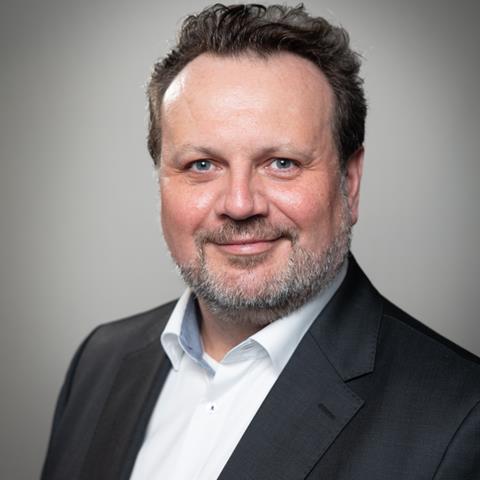
Speaking on a “Pension Investment Leadership” panel at IPE’s 2025 annual conference in Seville, held in December last year, a trio of leading European pension fund executives – Mark Fawcett, chief executive officer of NEST Invest, Régis Pélissier, CEO of ERAFP, and Christian Zeidler, chief financial officer of Bosch Pensionsfonds – outlined the key issues surrounding this decision.
Zeidler frames this as determining the “best trade-off between maintaining strategic control” while systematically choosing investment approaches that deliver an “attractive risk/return profile”. For Bosch Pensionsfonds, this means that they have the capacity to make independent decisions free from governmental interference – a luxury not uniformly available across the European pension landscape.
NEST’s approach reflects the pragmatism required when serving what Fawcett describes as a market segment deemed “unprofitable” by commercial providers. The fund has adopted a selective insourcing model, retaining control over “key parts of the value chain such as asset allocation and manager selection” while acknowledging limitations in specialist areas.
As Fawcett candidly admits regarding private equity: “We don’t think we can be a great private equity management house.” This self-awareness has led NEST to outsource such mandates while leveraging scale to negotiate “very low fees” with no “carried interest or performance fees’.
ERAFP operates within yet another paradigm, in which the regulatory framework largely determines operational structure. As a mandatory scheme for French civil servants, its model is “framed by laws and regulations enacted by the government”.
Pélissier notes that while ERAFP manages the sovereign portfolio internally, other “asset classes are externally managed by dedicated asset managers” – a structure under constant scrutiny from authorities “very, very focused on reducing the costs”.
What emerges is not a universal solution but rather the imperative for each institution to develop a bespoke operating model that balances efficiency, expertise, and strategic autonomy within its particular constraints.
Members find pensions ‘really boring’
Perhaps nowhere is the disconnect between institutional importance and public engagement more pronounced than in pensions. Fawcett’s observation is stark: NEST’s 13m members “don’t find pensions very interesting. In fact, generally, they find it really boring.”
This presents pension fund leaders with a communications challenge that extends beyond traditional investor relations. The solution, at least for NEST, has been to pivot toward impact-oriented narratives.
Investments in tangible assets such as “wind farms that we are shareholders in” generated online content with “something like 10m views”, Fawcett says – a dramatic contrast to the engagement with conventional investment topics, where “virtually nobody saw the section on emerging market debt”.
The lesson is instructive: members may be indifferent to basis points and Sharpe ratios, but they respond to investments that align with their values and present visible, comprehensible outcomes.
For pension fund leaders, this necessitates a dual communications strategy – maintaining the technical rigour required for sophisticated stakeholders while developing accessible, values-based narratives for broader membership engagement.

The tension between fiduciary duty and national interest represents perhaps the most politically charged challenge facing European pension funds. This manifests most clearly in the question of home bias – the extent to which domestic investment should be privileged over global diversification.
For NEST, operating in a jurisdiction in which “the UK government is very keen that pension funds and universities do more in growing the UK economy”, this presents a delicate balancing act, Fawcett concedes.
He acknowledges the “encouragement” while emphasising the fund’s independence and responsibility to deliver “good returns”.
NEST’s response is to maintain 20% in UK assets, at the same time as UK equities represent just 3.6% of the MSCI ACWI index. This, explains Fawcett, represents a strategic compromise weighted toward “things like infrastructure that give inflation-linked income streams” that match liability profiles.
This is fiduciary duty meeting political reality: domestic investment that simultaneously serves member interests and addresses governmental concerns, creating what Fawcett describes as a “win-win” delivering both returns and “positive impact”.
‘European bias’
For ERAFP, with 78% of assets in Europe, the framing differs. Pélissier defends this “European bias” by arguing “we fully endorse this… because we think that this is in the long-term interests of European citizens and our beneficiaries are European citizens”.
Here, the definition of beneficiary interest explicitly encompasses the economic vitality of the broader European project – a holistic interpretation that extends beyond narrow financial optimisation.
The home bias debate thus reveals a fundamental question: what constitutes acting in members’ best interests when those members exist within specific political economies? The answer, it appears, varies by institutional context and regulatory framework, but the challenge is universal.
The pursuit of returns in a low-yield environment has driven European pension funds increasingly toward alternative assets, introducing challenges around liquidity, fee structures and asset opacity.
At the speculative extreme, cryptocurrencies represent what might be termed the anti-investment. The consensus among these pension leaders is unambiguous.
Pélissier notes ERAFP’s regulations “do not permit them as legible assets”. Fawcett articulates the fundamental objection: “Investments have a positive expected return” – a characteristic not clearly demonstrable for Bitcoin. And Zeidler says that the “risk association is far too high” for Bosch, noting that cryptocurrencies “do not have any fundamental value”, which makes them unsuitable, among other reasons, for their investment strategy.

Private equity presents a more nuanced paradox. Fawcett’s analysis reveals the structural challenge: while PE managers may generate “6-7% excess return over and above listed equities”, they frequently “take the entire excess return” through fee structures, meaning “net of fees, there is no excess return whatsoever”.
The traditional ‘2 and 20’ fee arrangement – 2% management fee and 20% carried interest – effectively transfers the asset class’s economic benefit from investor to manager.
NEST’s solution has been to leverage institutional scale, negotiating “much more reasonable fees with no carry and a reasonable but not expensive management fee”, explains Fawcett.
This aggressive fee negotiation is critical because PE, when “done right”, he says, can be “very profitable” and offers advantages including “complete transparency in the companies they invest in” – transparency often lacking in public markets.
Private markets remain ‘a key theme’
For Zeidler, private markets remain “a key theme”, with Bosch increasing allocation over the years from 10% to 24% on the conviction they still “offer an attractive risk-return profile” when approached systematically. The challenge is not avoiding alternatives but ensuring fee structures permit investors to actually capture the returns these assets generate.
Perhaps the most profound challenge facing European pension fund leadership is the integration of climate change into core fiduciary frameworks – a shift that fundamentally redefines what it means to act in members’ best interests.
For Fawcett, the logic is unambiguous: climate change is the “biggest risk for our young membership” and ignoring it would be “ridiculous and against our fiduciary duty”. With members as young as 16, the investment horizon extends 50 years or more – a timeframe over which climate risks translate directly into financial liabilities.
It also remains a top priority for ERAPF, says Pélissier. The rationale is that accounting for externalities is ultimately “in the interest of the beneficiaries”. The challenge lies in execution – maintaining commitment even when international climate trajectories appear jeopardised.
This represents a decisive break from Milton Friedman’s doctrine that corporate management’s sole obligation is maximising shareholder returns. Modern pension fund leaders increasingly acknowledge, as Fawcett notes, the “impact of externalities” – accepting that long-term financial performance cannot be divorced from broader environmental and social sustainability.
What comes across is that the challenges for European pension leadership are structural, requiring continuous optimisation of operating models; communicative, demanding innovative approaches to member engagement; political, balancing national interests against global diversification; and financial, extracting value from alternative assets while controlling costs.
Overarching all of this is the fundamental reconceptualisation of fiduciary duty to encompass long-term systemic risks, particularly climate change. Addressing these challenges will require many more hours of debate.