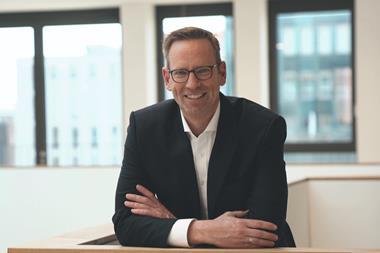




Lyes Arezki, investment manager for private markets at France’s UMR, sets out the pension provider’s approach to portfolio construction and private markets
One of the major challenges in France – and across Europe – is our ageing population.
Faced with the demographic challenge of an ageing population – and the consequences it has on autonomy, mental health, social ties and the living environment – we are committed to directing part of our investments to the theme of ‘Ageing Well’.
We view the major themes of ageing well through four pillars.
The first is physical health and autonomy, which concerns the ability to maintain or regain stable bodily health and functional autonomy in daily activities. It also includes the material environment that allows us to live in safety and in an adapted way.
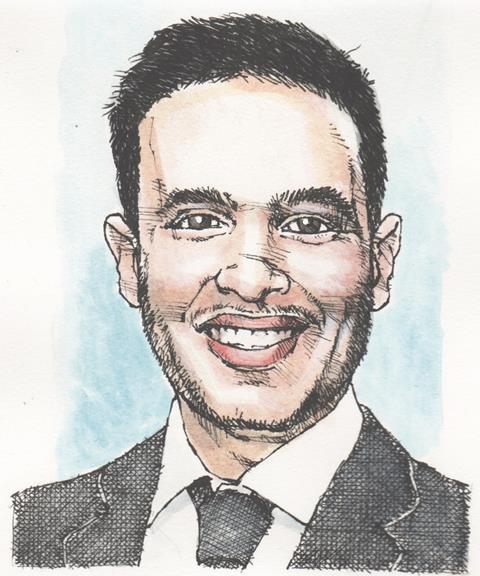
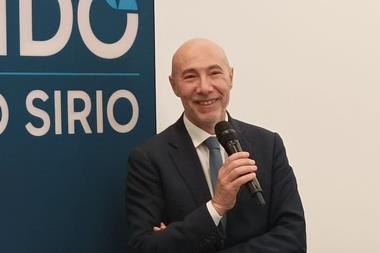
Lyes Arezki
Investment manager for private markets at UMR
- France’s dedicated pensions mutual
- Location: Paris and Nantes
- DB plan
- €11bn assets under management
- Arezki oversees the private debt portfolio
The second pillar concerns cognitive and psychological abilities. This pillar includes the prevention of cognitive decline, the maintenance of mental health and support in the event of disorders (Alzheimer’s, anxiety, psychological isolation). It is also about access to information and understanding of the world.
Our third pillar is social integration and the maintenance of social ties. We believe passionately that the quality of social relationships, inclusion in society, the maintenance and development of living a meaningful life and the fight against isolation all contribute to ageing well. We include carers and forms of civic or cultural engagement in this pillar.
Our fourth pillar encompasses economic security and the environment. For this pillar, we focus on the economic and material conditions of ageing (income, housing, access to services, infrastructure). It touches on the ability of an individual to be able to choose their lifestyle and to be able to access it and live it in a meaningful way.
Through our private debt strategy we can offer flexible capital (soft equity, mezzanine) to companies that provide services to enable people to age well.
“We want to improve physical health and autonomy for people as they age, through social integration, economic security and by providing the right environment for ageing well”
We want to improve physical health and autonomy for people as they age, through social integration, economic security and by providing the right environment for ageing well.
This is why we have rethought our approach as an investor and developed a thematic investment strategy to deploy €350m between 2025 and 2027 across all our asset classes that target the entire ageing-well value chain: health, housing, inclusion, support for caregivers, care professions, technology and so on.
Our core and multi-asset team invests across listed equities, real estate, a dedicated private equity fund and direct private debt.

Our multi-asset approach aims to achieve measurable, sustainable and coordinated impact between different investment vehicles and direct investment. It also guarantees coherence and complementarity between the different asset classes, in the service of an integrated and efficient ecosystem for ageing well.
In addition to generating long-term stable returns for our members, the aim of our ageing-well strategy is also to have a very strong impact in society.
Our private debt strategy provides financing solutions adapted to the essential players who support the global ecosystem of ageing well. This financing makes it possible to stabilise and develop key players.
The impact of this private debt asset class is measured by its ability to create a multiplier effect on the entire portfolio, by financing strategic nodes that facilitate access to the solutions supported by other investments.
We also see this approach as a lever for partnership in co-financing with banking players to broaden its reach.
We have an investment pot of around €10m for direct private debt investments, which I manage as lead portfolio manager, applying a fully integrated financial, ESG and impact investment approach.
I will also allow other LPs [limited partners] who are sensitive to this theme to co-invest alongside us in these impact deals, as I believe that this direct approach finds even greater meaning and effectiveness when built collectively.
Our main objectives for our private debt strategy focus around impact, and we target investments that generate a minimum net financial return of around 8% to 10% for unitranche instruments and at least 13% for mezzanine.
We operate as an active investor through fund governance and a sustainability committee, and we are always mindful about how we measure impact. Our investment strategy for direct private debt lending targets lower-tomid-market companies whose activity demonstrates a concrete impact within our ageing-well framework.
Our direct debt lending investments range from €1m to €3m and we tend to make three to four investments across this asset class each year, mostly in France.
In addition to direct lending, we will consider club deals with banks, as well as co-investments. All of our investments have high ESG targets with tailored social KPIs [key performance indicators].
We have ambitious plans for the future. Looking ahead, I would like to go further by creating a market format similar to social bonds in listed markets. We could then act in concert with other investors (banks, institutions, asset managers and family offices) to democratise an ‘ageing well’ loan or bond format, of which we would be the main sponsor, while remaining open to all stakeholders willing to join and contribute to the initiative.
If successful, this would have multiple benefits such as bringing in other lending organisations so that they are also acting in line with our mission to push the ageing-well ecosystem to improve its ESG practices and become an active player in impact. This market-based format would also make it possible to optimise the pricing of impact debt instruments so that they become as lucrative as traditional loans, while maintaining their impact objectives.
We would also be a contributor to financial innovation.
We would also like to bring together the entire ageing-well ecosystem, including supply chains, to negotiate pricing that is as remunerative as traditional contracts for impact investments.
A reimagined market format could also, if successful, increase the liquidity of these securities.
This article is based on a presentation at the IPE Conference in Seville late last year, in a session moderated by Lauren Mills