





Swiss pension funds are stepping up their exposure to gold as a perceived safe haven, with some schemes using the precious metal as a partial substitute for US treasuries to protect portfolios against geopolitical and financial shocks.
Several pension funds added gold to their strategic asset allocation for the first time in 2025, and more schemes could follow in the coming years, according to Andreas Rothacher, head of investment research at Complementa.
Gold is “one potential answer” to replacing US treasuries as investors lose trust in the asset class and in the US dollar, Rothacher said.
However, he added that the sharp rise in prices could deter some pension funds from increasing allocations further.

Gold climbed as much as 55% in 2025, driven by uncertainty surrounding tariffs and strong demand from exchange-traded funds and central banks, according to JP Morgan. It breached the $5,300 mark per ounce for the first time this week, while the value of the dollar fell to a four-year low.
Swiss pension funds likely generated returns of between 1% and 2% from gold last year, depending on rebalancing measures and costs, Rothacher said.
Gold was the best-performing asset class in the portfolio of the CHF30bn (€32.7bn) pension fund of Swiss retailer Migros Pensionskasse, delivering a return of 44.6% last year.
The pension fund’s allocation to gold rose from 2.6% to 3.5% year on year in 2024, exceeding the 3% target set out in its strategy.
“We will maintain the weight at around 3%, rebalancing in case of significant price fluctuations,” said Christoph Ryter, the fund’s chief executive officer.
Gold price developments in 2024 and 2025 also had a positive impact on the overall performance of Publica.

“The allocation to gold served as a diversifying factor within the portfolio. This was particularly noticeable on days when shocks, for example Liberation Day, the Greenland crisis, Japan, caused sharp movements on the equity and currency markets, and interest rates,” said Frederik von Ameln, senior portfolio manager.
Publica holds around 80% of its gold exposure physically, with the remaining 20% held via swaps. The underlying asset of the swaps is an index tracking the price performance of gold and silver futures.
“We have no real, inflation-adjusted, return expectations for gold. We view it, among other things, as a hedge against inflation and geopolitical shocks,” von Ameln added.
The pension fund expects geopolitical uncertainty and economic volatility to continue influencing gold prices.
Economic growth, debt levels, inflation and real interest rates, alongside structural factors such as sustained demand from central banks restructuring their reserves, will continue to shape gold price movements, according to von Ameln.
“It is important to bear in mind that even gold is not an absolute safe haven”
Frederik von Ameln at Publica
“Nevertheless, it is important to bear in mind that even gold is not an absolute safe haven. History provides examples of periods of financial repression that also affected gold holdings,” he said.
At St Gallen Pensionskasse (SGPK), gold has also contributed to diversification and hedging, posting a performance of 42% over the course of 2025 and starting this year on a positive note.
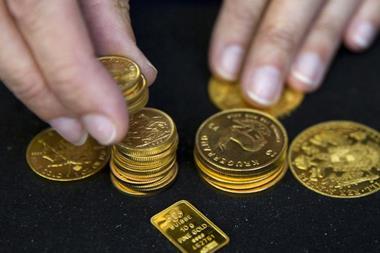
The pension fund holds physical gold bars, with around 86% of its holdings sourced from Swiss refineries, underscoring its commitment to the domestic gold market.
“As of the end of 2025, the value of the gold in our portfolio was approximately CHF879m. We maintain a strategic gold allocation of 5%,” said CEO Stefan Schäfer.
Uncertainty around global trade policy, geopolitical tensions and inflation in the US are likely to support demand for gold and its price development, he said.



.jpg)



.jpg)