







Asset Allocation – Page 40
-
 News
NewsNorway’s SWF balloons as forex effects, oil revenue outpace returns
NBIM reports 5.9% investment return for Q1 as equities gain 7.4% – but unlisted assets languish
-
 News
NewsAP4 slashes transport holdings after green-shift fundamental analysis
Swedish state pension fund divests airlines, shipping, and traditional lorries while buying into US rail and niche players in truck freight
-
 News
NewsFondenergia invests further €55m in alternatives
The scheme has allocated €20m to Azimut Libera Impresa’s infrastructure fund and €35m to Neuberger Bergman’s private equity fund
-
 News
NewsNorwegian government moves towards adding unlisted equity to SWF
Annual white paper on SWF includes call for more analysis from NBIM on unlisted shares
-
 Features
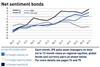
IPE Quest Expectations Indicator April 2023
With new, superior equipment, the Ukrainian military is set to start an offensive soon. Meanwhile, Yevgeny Prigozhin, leader of the Wagner Group, is jockeying to become Russia’s next kleptocrat on the back of the Russian army. Donald Trump’s candidacy is increasingly beleaguered by defeats in court. The trade agreement on Northern Ireland between the EU and the UK is a significant boon for both as well as for Prime Minister Rishi Sunak, not because the trade flows are so important but because the issue blocked co-operation in many other fields. While the winter has been mild and beneficial, there are early signs of a dry spring, quite possible in view of climate change setting in. If that materialises, harvests, therefore food prices, will be affected in autumn.
-
 Features
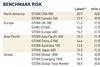
Qontigo Riskwatch – April 2023
*Data as of 28 February 2023. Forecast risk estimate for each index measured by the respective US, World and Emerging Markets Qontigo model variants
-
-
 Features
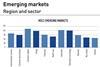
Ahead of the curve: Introducing the concept of a carbon risk-free curve
As global investors and companies progress towards their net-zero emissions targets, the concept of a carbon risk-free curve becomes increasingly relevant within the fixed-income market. In our view, this curve should provide a reference for evaluating the risk levels of bonds in relation to their issuers’ CO₂-equivalent (CO₂e) emissions and can therefore help investors to assess the impact of changes in CO₂e emissions on the yield spread of fixed-income bonds.
-
 Features
Fixed income, rates & currency: Optimism fades on mixed data
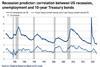
January’s market optimism has been subsiding, as forecasts for inflation and US Federal Reserve policy shift the outlook further to the hawkish side. However, the macro picture is not clear. Markets hang on to every new piece of data to clarify the outlook, be it non-farm payrolls, the consumer price index (CPI) or the US Job Openings and Labor Turnover Survey (JOLTS).
-
 Opinion Pieces
Emerging market investors should take the long view
For institutional investors, investing in emerging markets is a true test of fiduciary duty. The asset class – if it can be defined as such – has enormous potential, yet it is also risky, not just in terms of volatility but also of reputation.
-
 News
NewsAlecta’s board orders immediate strategy probe after US bank losses
Swedish occupational pensions giant says its First Republic Bank investment risks being completely lost too
-
 News
NewsAlecta says it’s solid despite losing €1.3bn on US banks in days
Silicon Valley Bank, Signature Bank collapses erase 1% of Swedish pensions giant’s portfolio
-
 News
NewsInarcassa hedges equity exposure, resumes private markets allocations
According to the new strategic asset allocation for 2023, Inarcassa is increasing its allocation to bonds by 3%, while reducing equities by 1.5%
-
 News
NewsAUM of Austrian pension funds grow to €24.35bn in last quarter of 2022
Market volatility last year led to pension funds’ overall negative performance (-9.68%), compared to a positive 9.68% in 2021
-
 Features
Qontigo Riskwatch – March 2023
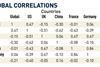
*Data as of 31 January 2023. Forecast risk estimate for each index measured by the respective US, World and Emerging Markets Qontigo model variants
-
-
 Features
IPE Quest Expectations Indicator March 2023
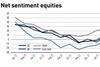
The next Ukrainian offensive will be in April at the earliest, as modern tanks will have arrived by then. US Republican pushback of ESG and climate-related investments are a new bone of contention in relations with the EU, already strained by the Trump presidency, and a bad sign for US-EU co-operation on China policy, an issue Japan seems to be ducking successfully. Aided by a soft winter, EU energy concerns have become quite manageable.
-
 Features
Ahead of the curve: The missing elements in the digital currencies debate
The recent contraction of the cryptocurrency markets poses questions about the viability of digital currency as an asset class for institutional investors. However, these developments have not undermined the efforts of central banks to pursue their own digital currency initiatives.
-
 Special Report
Natural capital: Asset owners start to engage
Two new global initiatives are under way to help investors focus on issues such as deforestation, while some managers have been on track for a while
-
 Features
Research: How pension funds look at Chinese assets
Allocations to Chinese assets are still modest. Vincent Mortier and Amin Rajan discuss key issues in the third and final article from the latest Amundi-Create-Research Survey


