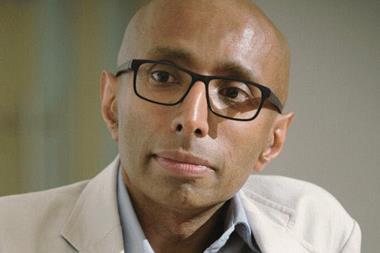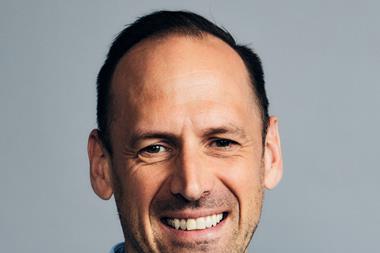
Raj Thamotheram, co-founder of Preventable Surprises and now independent adviser, says responsible investment has failed to tackle system-wide corruption that is now being enabled by the US administration, but that there are reasons for qualified hope
In March 2012, in a then regular column, I wrote that institutional investors act as “enablers of legalised bribery”. In March this year, US senator Elizabeth Warren told the Council of Institutional Investors, a major US industry body, exactly the same thing. That’s not vindication – it’s an indictment of everything the responsible investment community thought it was doing in those years between.
The speech is powerful and the evidence is damning: enforcement by the Securities and Exchange Commission (SEC) down from 2,700 actions to 300; tariff carve-outs for companies that donated to US president Donald Trump; cabinet officials selling stock before Liberation Day tanked the market; Trump family crypto holdings going from zero to an estimated $3bn (€2.5bn) in just over a year.
Warren is right that this isn’t one or two scandals – it’s wholesale, system-wide corruption at a scale that threatens the foundations of market integrity.
But is inviting a progressive senator to deliver a sermon the congregation won’t act on genuine accountability or the ritual that makes inaction easier? Platforming a critic and acting on her critique are very different things, and these institutions have lived comfortably in that gap for years.
So what did I get right in 2012, what did I get wrong, and what does it mean now?
Right: more than just the core diagnosis. The diversified investor argument was sound – a well-diversified portfolio has exposure to both the company that wins through corruption and the more ethical competitor it crushes. But I also flagged regulatory capture specifically, warning about the GE/KPMG hundred-year auditor relationship and the SEC siding with GE against a small pension fund.
“European and other international asset owners can provide the coalition cover that makes it safer for US institutions to follow”
Raj Thamotheram, co-founder of Preventable Surprises and now an independent adviser

I also argued company-by-company engagement was ineffective and investors should push for market-wide regulatory action. And I cited Ben Heineman, GE’s former senior vice president and general counsel, warning that crony capitalism threatens democracy – which I was told was alarmist but now looks like the central story.
Most importantly, I flagged corporate political spending as the transmission mechanism at precisely the moment Citizens United, a 2010 Supreme Court ruling that struck down limits on corporate and union spending in elections, was reshaping American political economy. Many investors weren’t connecting those dots yet.
First-mover problem
Wrong: I assumed the system retained meaningful self-correcting capacity – that rational long-term investors would eventually respond to evidence of systemic risk, that regulatory bodies could be pushed through legitimate channels, that crony capitalism had natural limits.
Three things I underestimated. The first was the speed and completeness of regulatory capture – drift to active complicity is a qualitative shift, not just a quantitative one; the SEC of 2026 is not a weakened version of its former self but an institution whose incentive structure has been reversed.
The second, and the one I most underweighted at the time, was Citizens United, which was just taking effect as I wrote – removing limits on corporate political spending was the accelerant that turned “legalised bribery” from a useful metaphor into a literal operating model, and no stewardship code was designed to function in an environment where companies can legally purchase the regulatory environment they prefer.
But most fundamentally: the first-mover problem. ESG frameworks and stewardship codes were real, but they were designed to lower the cost of acting after norms had shifted. None were designed to shift the norms themselves. That distinction, which I didn’t fully see in 2012, is the difference between progress and the situation Warren was describing last month.
Warren asked who has the courage to act. Framing it as courage misreads the barrier. The problem isn’t cowardice – it’s structural. Costs of moving first fall on individual institutions; benefits of collective action are diffuse. But the problem runs deeper than simple coordination: two of the most important players in that CII conference are unlikely to lead. Investment managers have profound conflicts of interest – they won’t bite the hand that feeds them mandates. And Republican-controlled state pension funds are politically aligned with the administration enabling the corruption. Stewardship codes were never designed for this. Neither was ESG.
In 2012 I ended my IPE column with “it is time for investor action”. Time, it turns out, was never the relevant variable.
European solution
But there are two reasons for qualified hope, and both are worth taking seriously.
The first is structural. MAGA’s foundational promise was to drain the swamp: to end insider dealing, rigged rules and elite self-enrichment. Tariff carve-outs for donors, presidential family crypto ventures, cabinet officials selling stock before Liberation Day – this is the swamp, by MAGA’s own definition. That internal contradiction doesn’t guarantee fracture, but it creates a specific political vulnerability that general opposition to Trump does not. It is an argument made in MAGA’s own terms, about MAGA’s own stated values.
America First influencers turned against the Iran war faster than almost anyone predicted. Coalitions fracture in unexpected ways and on unexpected timelines. Once that contradiction becomes visible within Trump’s own coalition, the political permission structure for investment managers shifts – not because they find courage, but because the cost calculus changes.
The second is precedent. Non-US asset owners can move first, and have done so before. In 2005, when News Corporation reincorporated in Delaware and extended its poison pill, it was Australian superannuation funds – UniSuper, HEST, Public Sector Super and others — that led the challenge in Delaware’s Chancery Court, joined by European funds Universities Superannuation Scheme, Hermes and ABP. Major US funds largely stayed out, constrained by domestic sensitivities. The investor coalition used the US legal system against a US-listed company precisely because non-US investors faced a different calculus. The logic runs the same way now.
European and other international asset owners – operating under mandatory due diligence regimes, facing different regulatory and fiduciary frameworks, with no MAGA base yet to protect against – can move first and provide the coalition cover that makes it safer for US institutions to follow.
The primary lever is direct engagement with the SEC itself: European funds, as major holders of US-listed assets, have standing to demand, not request, restoration of enforcement capacity on the specific failures Warren documented. This is the closest contemporary equivalent to what Australian and European funds did in Delaware’s Chancery Court in 2005: using institutional standing in the US system that domestic funds are politically unable to use.
Shareholder resolutions on political spending disclosure, and explicit flagging of SEC capture as a material governance risk, build the public record and widen the coalition behind that demand. Each of these is visible: when a filing picks up co-signers, when a board is forced to respond publicly, when a risk disclosure migrates from stewardship reports into earnings calls, it creates the signal US institutions need to join without being the lone first mover.
Neither mechanism is guaranteed. But one exploits a contradiction that MAGA created for itself, and the other has clear precedent. That is more than could honestly be said in 2012.
Raj Thamotheram is co-founder of Preventable Surprises and now an independent adviser