







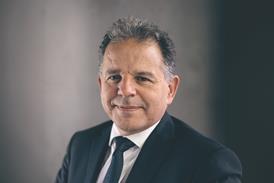

Mike Head, senior adviser at The Justice Company, explains how asset owners need clear exclusion criteria and independent judgement to address human rights violations effectively
Norway’s Gjedrem Committee has proposed significant changes to the ethical framework governing its Government Pension Fund Global, the world’s largest sovereign wealth fund valued at $2.3trn, including a greater emphasis on engagement before exclusion and a larger role for Norges Bank in deciding how to respond to ethical concerns about the companies it holds.
International law provides important principles, but translating them into investment decisions is rarely straightforward. Evidence may be incomplete, companies may dispute allegations, and the relationship between a product and its eventual use can be difficult to establish.
For pension funds and other asset owners, the challenge is to develop rules that are clear enough to uphold standards, yet rigorous enough to distinguish direct involvement from incidental exposure.
What the law settles, and what it leaves to investors
International humanitarian law and human rights standards identify the gravest conduct, including war crimes and crimes against humanity. The UN Guiding Principles on Business and Human Rights and the OECD Guidelines for Multinational Enterprises on Responsible Business Conduct set out what investors are expected to do about it: carry out human rights due diligence, with closer scrutiny where companies operate in conflict-affected areas.
But few laws tell an investor what to exclude. The Convention on Cluster Munitions shows how even a treaty can be read differently. The Cluster Munition Monitor 2026 counts 11 of the convention’s 112 states parties with laws that explicitly ban investment in cluster munitions, though Germany, Japan and Sweden say the convention does not prohibit investment in cluster munition production.
International law does not always prescribe a clear investment decision. Investors must therefore set their own criteria and assess the evidence against them.
What constitutes sufficient evidence?
An allegation alone should not determine a company’s investability. Equally, holding out for a final court judgment means waiting years while serious abuses continue.
The appropriate threshold lies between these extremes: credible, substantiated evidence that can withstand scrutiny. Investors must assess the reliability, independence and timeliness of sources, corroborate allegations wherever possible, and home in on the nature of the company’s involvement.
Context matters. A decade-old, unsubstantiated allegation should not carry the same weight as recent, independently documented evidence. Conversely, the passage of time should not automatically diminish the significance of a serious abuse, especially where its consequences persist.
Companies should also have a right to respond. Their explanations may establish that an allegation is inaccurate, the relevant activity has ceased, or the company had no control over how its products were used.
Why the nature of involvement matters
Consider a manufacturer whose vehicles or machinery are later used by a third party in operations linked to serious abuses. The presence of its equipment raises legitimate questions. But was the equipment supplied directly for that purpose? Was it purchased through an intermediary? Did the manufacturer know its intended use, or have any realistic ability to prevent it?
Dual-use technology presents another challenge. Satellite connectivity can support essential communications, financial services and civilian access to information, while also being deployed for military purposes. Facial recognition software can have legitimate security applications but may also be used for intrusive surveillance.
Investors must look beyond where a product appears and ask what the company supplied, what it knew, whether the application was foreseeable, and what influence it could exercise. A blanket exclusion based on geographic association risks overlooking these distinctions. Similarly, treating every indirect relationship as beyond the company’s responsibility risks setting the threshold so high that exclusions become ineffective.
When should engagement give way to exclusion?
Engagement can clarify disputed facts, improve disclosure and encourage changes in corporate behaviour, particularly in areas such as labour conditions and supply chain practices.
But engagement should not become an alternative to making a decision. Investors must make clear what they expect companies to do, within what timeframe, and at what point continued investment would become unacceptable. CCLA’s published engagement policy sets such a limit: “our dialogues with companies cannot be open-ended. For this reason, if engagement fails to bring about progress, we consider divestment.”

Engagement should not become an alternative to making a decision
Where the evidence shows involvement in conduct that breaches a fund’s exclusion criteria, engagement should not be used to negotiate away those boundaries. It may still be appropriate to check and re-check facts, seek remediation or assess whether the involvement has ended, but the grounds for continued investment must be explicit.
The role of judgement and independent oversight
Rules cannot anticipate every possible relationship between a company and a human rights violation. Some cases will remain ambiguous even after extensive research. That is where investor discretion is key, but it should operate within the framework rather than override it.
An independent review committee, drawing on legal, human rights and investment expertise, can examine contested cases and test whether conclusions are supported by the evidence. And those making the judgement should be far removed from the research and portfolio-management functions to challenge assumptions without fear of jeopardising an investment.
Norway’s proposed reforms bring this distinction into focus. Greater discretion for Norges Bank may enable more flexible responses to complex cases, but it also raises questions about the role of independent ethical assessments. Whatever the governance structure, investors must demonstrate that commercial considerations have not overridden their exclusion criteria.
The evidence exists, but it’s not where investors look
United Nations bodies, courts and independent monitors produce substantial evidence of human rights abuses, but this information does not always find its way into the policies and datasets investors use. LGT Capital Partners’ 2026 ESG report, covering 191 asset managers, owners and advisers, found that 47% address human rights in their ESG policies, against 67% for climate change.
Conflict monitors such as ACLED track incidents at a granular level, but it is unclear how consistently this intelligence feeds into the ESG ratings and screening tools investors rely on. Independent advisers such as Heartland Initiative, a US-based non-profit, are turning conflict and human rights evidence into analysis investors can act on.
The question raised by Norway’s ethical framework review is not whether investors should exercise judgement or follow rules. They need both. Hard boundaries set what an investor will not accept. Independent judgement decides whether the evidence shows those lines have been crossed. Without the first, engagement risks becoming endless. Without the second, exclusion risks becoming arbitrary. Investors should be able to show, in writing, where each line sits and why.
Mike Head is a senior adviser at The Justice Company