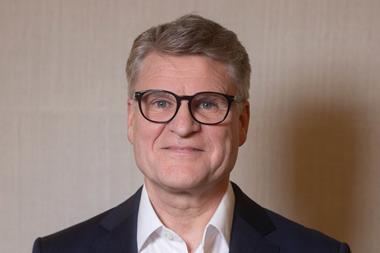
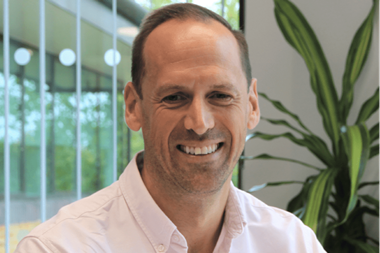
Herman Bril, the new chief investment officer of ABP since 1 January, fully supports the decision of the Dutch civil service pension fund to divest from fossil fuels. “But I also understand that people say we will be dependent on fossil fuels for a very long time to come.”
With Herman Bril, ABP has finally found a new CIO after several years of interim solutions. After the departure of Dominique Dijkhuis in 2023, Rianne Lemsom (until February 2025) and Jack Julicher held the role on an interim basis.
Bril worked as CIO for the United Nations pension fund from 2016 to 2021. Most recently, he was the director and head of sustainability and climate innovation for the Public Sector Pension Investment Board, Canada’s public sector scheme. He was based in Montreal and later in London. Before 2016, he worked in the Netherlands for Cardano and insurance firm Interpolis.
His move back to the Netherlands had already been planned before the role at ABP came into the picture, he says in an interview with Pensioen Pro, IPE’s Dutch-language sister publication.
“I have been living in Amstelveen [a suburb of Amsterdam] with my wife since September 2025. Our children have stayed in London. When we decided to return to the Netherlands, the position at ABP was not yet in the picture. We wanted to live closer to our family again, to be able to spend more time with them. That was the main reason for living in Amstelveen, where I grew up.”
Team NL
After some time, a recruiter told Bril that ABP was looking for a CIO.
“It seemed predestined. When my wife asked me earlier what kind of work I wanted to do when we lived in the Netherlands again, I said: ‘I think it would be nice to do the investments at ABP’. And that opportunity soon presented itself,” he recalls.
“There is more at play than geopolitics”
Herman Bril at ABP
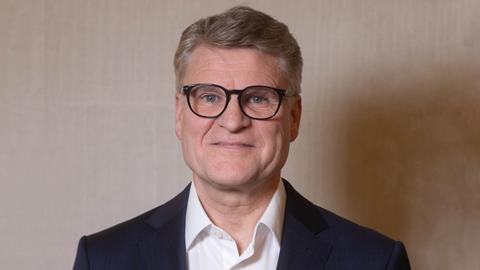
“I consider it as playing for Team NL,” he said, drawing a comparison with the athletes competing for their country during the recent Olympic Summer and Winter Games.
“I have known ABP since childhood. My father worked at the Vrije Universiteit and my grandfathers were a headmaster and a municipal clerk. They have enjoyed their ABP pension for years. I have seen how important it is to have a good pension. In that sense, this new job felt like coming home.”
Fossil fuels
Asked whether he supports ABP’s 2021 decision to divest fully from fossil fuels, Bril declines to give a straightforward answer.
“It’s not so much about whether I support the decision. In 2021, the board considered that engagement was insufficiently successful. And has therefore decided to get out of fossil fuels. This also reduces the risk of stranded assets. Each fund makes its own choice,” he says. “I understand very well the decision to divest. But I also understand that people say: we will be dependent on fossil fuels for a very long time to come.”
As Bril settles in his new role, traditional US dominance of world politics is giving way to a more multi-polar world order, with rising geopolitical tensions and increasing volatility as a result. How does this affect ABP’s investment strategy?
“When I started in my career, the world looked different than it does today. It now seems like a more fragmented world, where geopolitical factors play a much larger role. The trick is to look carefully at what the consequences are. This affects the composition of your investment portfolio. There is more at play than geopolitics. Technology, climate and demographics are also changing. You have to recalibrate these changes in your policy to see if you need to make adjustments,” says Bril.
US Treasuries
ABP selling the majority of its US Treasury holdings last year seems reflective of this changing environment, and the erosion of investor confidence in the US and the reduced standing of the US dollar.
“Investment portfolios are never static and constant. We always apply changes,” comments Bril. “It is also related to whether or not to hedge currency risk.”
But the fund’s lower exposure to Treasuries also has to do with ABP’s transition to a new defined contribution arrangement in January 2027, he adds.
“The valuation risk of non-euro government bonds – that the US yield curve moves differently from the European discount curve – is absorbed in the financial framework by our reserves. This has no direct impact on participants. In the new system, this risk will be passed on directly to the assets of the participants.
“That is why it is now more important to align our investments with our liabilities. For this reason, we have already reduced our exposure to non-euro government bonds in preparation for the transition.”
ABP sells Palantir shares
In the last quarter of 2025, ABP sold all its shares in US software firm Palantir, according to a recent update of the fund’s investment portfolio.
At the end of September last year, ABP owned €825m worth of shares in Palantir, which it had all sold by the end of December.
ABP declined to comment on the divestment, beyond saying that ABP wants its investments to be in line with “a responsible society.”
Palantir, which was founded by the controversial tech billionaire and prominent Trump donor Peter Thiel, has been criticised for enabling mass surveillance by selling software to the Israeli and US governments.
This article was first published on Pensioen Pro, IPE’s Dutch sister publication. It was translated and adapted for IPE by Tjibbe Hoekstra.