





The German government and social partners are exploring ways to accelerate the take-up of defined contribution (DC) pension plans among employees, as the country’s social partner model struggles to gain traction eight years after its introduction.
Launched in 2018 as a major innovation in Germany’s occupational pensions system, social partner DC plans have so far failed to achieve widespread adoption.
Only around 40,000 employees, equivalent to approximately 0.1% of Germany’s workforce, are enrolled in social partner models, which are the only occupational pension arrangements in the country that operate without pension guarantees.
Speaking at the Handelsblatt occupational pensions forum in Berlin this week, Natalie Brall, head of the subdivision for pension provisions at the Federal Ministry of Labour and Social Affairs, highlighted “very good examples” of social partner models being opened to companies not bound by collective bargaining agreements.
However, the labour ministry believes that provisions introduced in January through occupational pension reforms, allowing social partner models to be extended to third-party employers, still “has a lot of potential”, Brall said.
“It takes social partners to include as many third parties as possible. The labour ministry is optimistic that there will be a positive development in this regard,” Brall added.
German trade union Ver.di has “opened the door” to third-party employers and is now working with larger companies to achieve greater scale, according to Judith Kerschbaumer, head of the union’s social policy division.
She said Ver.di had demonstrated that the social partner model could work through its partnership with asset manager Metzler and BVV, the pension provider for Germany’s financial services industry.
However, the priority now is to extend occupational pension coverage to employees who currently lack access to workplace pension arrangements, a group accounting for around half of Germany’s workforce.
As part of ongoing discussions with employers’ association BDA and the labour ministry, Ver.di has proposed “more portability” and improvements to occupational pension subsidies, Kerschbaumer added.
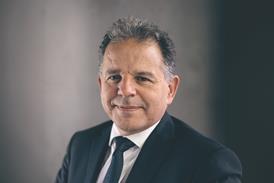
Meanwhile, Christian Pauly, member of the management board of Metzler Sozialpartner Pensionsfonds, revealed that social partners are planning to establish an “employers’ interest group” to facilitate access to the model for companies not covered by collective bargaining agreements.
“This is the creativity that we need” to spread DC plans nationwide, he said.