







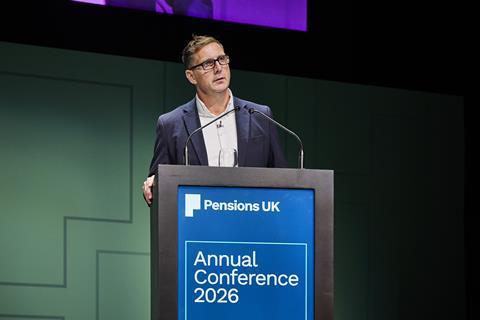
Pensions Commission recommendations, pensions dashboard readiness and local government pension scheme (LGPS) accountability featured prominently at Pensions UK’s 2026 annual conference last week in Liverpool, alongside warnings over speculation about pension tax changes in the upcoming UK Budget.
Shaping pension reform
Jamie Fiveash, chair of Pensions UK, urged the industry to move from reacting to reform to shaping it, setting out three priorities for the sector.
First, members must be at the centre of reform, with services designed around their actual needs rather than industry assumptions. Automatic enrolment has succeeded, he said, but millions remain outside the system or are saving too little.
Second, he called for greater collaboration on longstanding challenges. Waiting for legislation delays progress and raises costs, he argued, citing small pots and pensions dashboards as examples of slow delivery.
Third, the sector must anticipate political, economic and social change. With public finances under pressure, pensions risk becoming a target for short-term savings and quick fixes. The industry must make the long-term case in terms that resonate with members and the public, as well as policymakers.
As reforms move towards implementation, Fiveash concluded, the focus must be on practical delivery.
Pensions adequacy
Pensions commissioner Jeannie Drake told delegates that pension adequacy was a systemic challenge requiring collective action.
She said the challenge could not be addressed by the pensions industry, the state, employers or employees alone. All parties needed to “manage implementation of reforms” and “allow for time to adjust”.
One problem, she said, was that the sector was “relying on investment returns to reduce undersaving”, which was “no use when saving levels are so low”.
Drake acknowledged that the pension system’s architecture was in place, but said inequalities in private savings “persist”. Increasing saving was part of the solution, but would not be “costless”: the government would face higher tax-relief costs, employers would need to plan for changes to remuneration budgets, and employees could see lower take-home pay.
However, she said awareness of the savings challenge had increased since the Pensions Commission began its work.
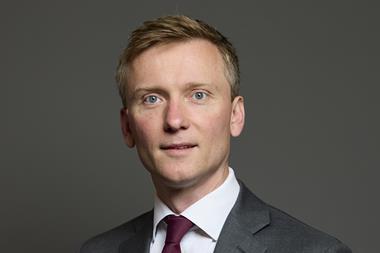
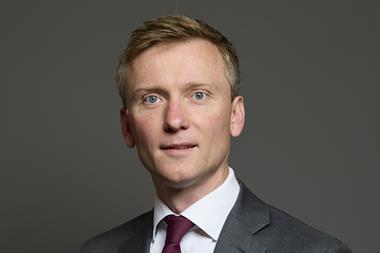
Pensions minister Torsten Bell confirmed at the conference that the Commission’s final report would be delivered in February, with the government’s response due in spring.
Pensions dashboards
The industry was warned to prepare for increased demand ahead of the launch of the Money and Pensions Service’s (MaPS) pensions dashboard.

Oliver Morley, chief executive of MaPS, said 96% of pension records, representing around 90 million records, would be connected by the end of October, with deferred schemes taking coverage close to 100%.
Morley urged the industry to shift its focus to demand from savers, warning administrators to prepare for increased member contact, maintain accurate data and ensure their technology runs smoothly.
The formal launch is expected in 2027/28, with six months’ notice from the pensions minister.
MaPS research found that 56% of users surveyed had taken or planned to take action after using the service. A quarter were thinking more about saving, while 12% had found a lost or unknown pension.
“The next challenge is making sure that people have a positive experience when they start using the MoneyHelper Pensions Dashboard, and that they can access the information they need,” Morley said.
LGPS pooling and accountability
A session on the LGPS highlighted the need for clear accountability as funds and investment pools collaborate more closely under ongoing reforms.
Adrian Myers, chief commercial officer at London CIV, said funds should decide what they wanted to achieve and why, including their investment strategy and asset allocation, while pools should determine how those decisions were implemented.
Panellists said clear divisions of responsibility were not enough on their own, stressing the need for effective governance, constructive dialogue and transparent oversight, including clear routes for challenge and escalation.
Myers cited London CIV’s service level description, agreed with its 33 partner funds, which sets service standards and turnaround times and includes a six-stage dispute resolution process.
Collaboration can help funds share expertise and build capacity, but must not undermine local accountability.
“Collaboration doesn’t mean one size fits all for everyone,” said Jo Derbyshire, chief executive officer of Local Pensions Partnership Administration (LPPA). She added that it made no sense for the scheme’s 86 funds to tackle common problems separately.

Bell responds to Reform UK’s LGPS plans
During a question-and-answer session on the final day, Bell praised the LGPS for its “impressive progress” over the past two years and was asked about Reform UK’s plans for the scheme.
In February, deputy leader Richard Tice said the party would replace defined benefit (DB) pensions for new LGPS members with defined contribution (DC) arrangements and merge all LGPS funds into a single entity to be invested as a “British sovereign wealth fund”.
Bell declined to engage with other parties’ proposals, but said: “When I hear people say they want a sovereign wealth fund, lots of what I think they want the LGPS is already doing […] We are in the foothills of what the pools can achieve as they become some of the biggest pension [investors] in our country, and in Europe. I think we will continue to see innovation in that space.”
Budget speculation
Bell also criticised what he called “really irresponsible behaviour” by some pension providers in response to speculation about pension tax changes in the upcoming Budget.
Session chair Zoe Alexander noted that some commentators had suggested schemes could be forced to invest more in the UK, including through the tax system.
“If I’m really honest, I’ve also seen some really irresponsible behaviour by people who call themselves pension providers,” Bell said. “Which is, for cheap points to get a bit of publicity in the run-up to Budget, producing nonsense that maybe makes them feel good because they look like they are providing a wealth business and they can get coverage in the FT, but at the price of scaring people.”
“We should be rebuilding trust, and that means not choosing cheap routes to publicity and instead trying to build the brand of pensions,” he said.