




Peers have voted to insert a safeguard into the UK government’s push to consolidate the defined contribution (DC) market, backing an amendment allowing regulators to waive scale requirements where consolidation cannot be shown to improve member outcomes.
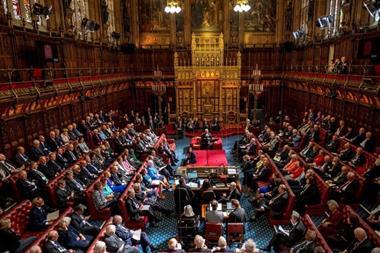
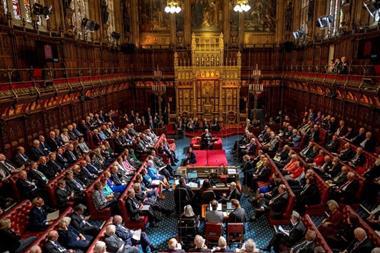
Amendment 77 was agreed in the House of Lords by 191 votes to 118 during the report stage of the Pension Schemes Bill.
It would give The Pensions Regulator (TPR) discretion to treat certain master trusts and group personal pension schemes as meeting statutory scale requirements, even if they fall below the government’s size threshold.
Under the amendment, an exemption could be granted if the regulator is satisfied there is “no reasonable evidence” that consolidating a pension fund into a larger arrangement would be likely to improve outcomes for members.
The measure sits within Clause 40 of the Bill, part of a broader reform package aimed at reshaping the UK’s DC market around scale, consolidation and long-term investment.

The amendment sets out a range of factors the regulator would need to consider when assessing whether consolidation would be beneficial, including net risk-adjusted investment performance, governance quality and operational capability, as well as whether schemes already benefit from pooled or cross-scheme investment structures or participation in a wider asset management group.
Supporters argued that the amendment would prevent the scale regime from becoming a blunt, size-driven exercise that could damage well-run schemes.
James Younger (Viscount Younger of Leckie), who moved Amendment 77, said the existing framework risked prioritising “process over performance” and could force consolidation even where it disrupted successful investment strategies or raised costs for members.
“Scale should be a means to an end, not an end in itself,” he told peers.
Monroe Palmer (Lord Palmer of Childs Hill) said the amendment would allow exemptions from scale requirements where there was no evidence that consolidation would improve outcomes for members.
However, Maeve Sherlock (Baroness Sherlock), minister of state in the Department for Work and Pensions (DWP), warned the exemption risked undermining the government’s long-term vision for the DC market, which she said would ultimately comprise around 15 to 20 large master trusts and group personal pension “megafunds”.
She argued that allowing scheme-by-scheme exemptions would create uncertainty for employers and members and require the regulator to make highly contestable judgments that could end up before the courts.

Earlier concerns
Earlier debates on the Bill raised concerns that forcing pension funds to grow or consolidate could stifle innovation.
During the fifth day of debate in the House of Lords, Sheila Noakes (Baroness Noakes) warned that the government was displaying “an obsession with size that overrides their professed desire for better outcomes for savers”.
She said “good investment returns are not the exclusive preserve of schemes that reach the magic £25bn of assets”, adding that the evidence cited by ministers showed only correlation, “not that good returns are obtained only by those which pass the size threshold”.
While her concerns were echoed by other peers, ministers opposed the exemption at the time.
Rauri Grant, head of policy at TPT Retirement Solutions, said: “Scale has many benefits, but AUM growth alone doesn’t guarantee good member value. Therefore, it seems eminently reasonable to entrust the regulator, for whom member benefits is the primary objective, with factoring quality and value into the scale test.
“Besides, if scale is indeed the panacea it has been presented as, no sub-£25bn scheme would qualify for this exemption in any case, so it is unclear why the government would resist this amendment.”
Steve Charlton, managing director of SEI Master Trust, also welcomed the amendment.
He said: “As far as we’re concerned, if you’re good at what you do, are well governed, have good funding and good support from an investment perspective and good outcomes, then it’s really difficult for the TPR to justify withdrawing your ability to operate in a multi-employer occupational arrangement.”