






For institutional investors, buying a portfolio of companies with a strong impact record can be attractive, but it does not automatically mean making an impact investment.
It is hoped that the nascent secondaries sector, which allows buyers to examine the underlying companies and their impact track records, will help drive impactful investments and enable new investors to access a diversified portfolio of impact assets without the traditional risks faced by direct investments. But to what extent are impact cases independently tested, and can this result in a deal being changed or rejected altogether?
Nicolas Muller, head of private equity partnerships at Blue Earth Capital, tells IPE about one such example when an investment was rejected after impact diligence challenged its plans.
Muller explains that Blue Earth had looked at a healthcare services business in an emerging market with what appeared to be an unusually strong impact case. It delivered an essential, recurring treatment at a small fraction of developed-market prices; most of its network was in smaller cities and towns rather than major metros; and most of its patients were covered by public health schemes.
“Commercially, it was the leader in its market, and, on quality, it was the better asset in the sector. The problem sat in the growth plan,” Muller says. The return case depended on expansion into countries where Blue Earth was not comfortable with the exposure and did not believe the impact case held up, he adds.
“The access argument that made the business compelling in its home market did not travel with it,” Muller says. “So the impact we would have been underwriting over our holding period was not the impact the track record showed, which is exactly the distinction a secondary buyer must make.”
Today, the impact secondaries market remains small and lacks any solid estimate of transaction volumes. A 2026 report by the Institutional Limited Partners Association, in collaboration with Tideline and Campbell Lutyens, found that only seven of more than 1,300 impact funds tracked by New Private Markets were known to invest in secondaries.
However, around 40% of limited partner respondents identified the development of an impact secondaries market as a key enabler of institutional participation, suggesting scope for growth as investors seek greater liquidity. Blue Earth Capital’s dedicated strategy offers some indication of potential demand, with the strategy having attracted commitments exceeding $100m (€89m) at its first close in January 2026 and $200m at its second close in July.

Tougher test for the buyer
Jamie Broderick, deputy chair of the Impact Investing Institute (III), believes a secondary buyer should face a higher test of impact than the original investor.
“You’ve got a lot more information than the original buyer did,” Broderick says.
That makes the buyer more accountable, he argues. “You get to look at their theory of change and then test it against their operating history.”
However, Amit Bouri, chief executive officer of the Global Impact Investing Network, stresses that historical data comes with measures chosen by the original investor, which may not answer the new buyer’s questions.
“You are inheriting a set of metrics,” he says.
Inside the diligence process
Blue Earth Capital’s investments include the Spanish marine-technology firm Zunibal.
Blue Earth announced its investment in Zunibal in April, citing the firm’s ability to help fisheries adopt more sustainable practices through leading-edge technology as a core element of the impact case.
“We treat a manager’s impact analysis as evidence to be tested rather than as a conclusion to be adopted,” Muller says.
First, every transaction is assessed again through Blue Earth’s own framework. This involves building a logic model from scratch that maps each business’s activities to its outputs, outcomes and the Sustainable Development Goal targets they support.
Then, each business receives a five-dimension impact rating (who is affected, what outcome, how much of it, the market gap and impact risk) with separate taxonomies for social and climate outcomes, alongside an assessment of what the firm’s own capital and ownership add.
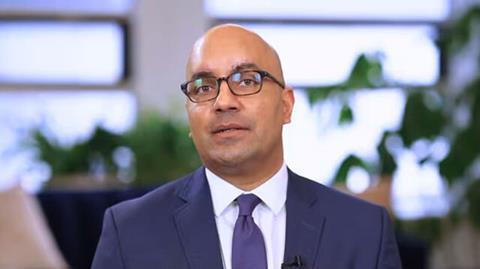
Rebuilding rather than simply reviewing forces each business to be described in Blue Earth’s terms, which is also what makes assets from different managers comparable with one another, Muller explains.
“How deep we go is driven by concentration and by risk rather than by whether a deal is GP-led or LP-led,” he adds.
For example, a single-asset continuation vehicle is diligenced at the company level rather than at the fund level. This process involves visiting sites, meeting management, running independent integrity checks and speaking to regulators, scientists, NGOs and customers rather than solely relying on the GP.
Alongside this, Blue Earth also reviews the previous years’ environmental, health and safety audit findings to establish which items had genuinely been closed and which were still open.
In the case of a diversified LP-led portfolio, each asset is screened against Blue Earth’s exclusion list and against high-risk sector and geography criteria. Diligence then scales with that categorisation, with full asset-level work on the largest positions and on anything flagged, Muller explains.
María Merry del Val Mariátegui, global head of impact and country director for Madrid at Holtara, stresses the importance of understanding the business behind any deal. “You cannot invest in an impact company if you don’t see that management is aligned,” she says.
Holtara, Apex Group’s sustainability advisory and technology business, provides impact screening and due diligence services to help investors assess prospective investments against their funds’ impact objectives.
Looking ahead to what best practice in the impact secondaries space may look like, Broderick at the III believes it is important for people to understand why they are investing in the secondary market and think of the purpose they are trying to achieve.
“There needs to be a recognition that the asset has evolved from where it originally was, and that you need the right kind of capital for each stage of that evolution,” he says.
“Sometimes you need high-impact capital in the beginning, but it’s entirely possible that you could have mainstream capital, non-impact mainstream capital, at the end of this chain. In fact, that feels like a victory to me.”
When diligence changes a deal
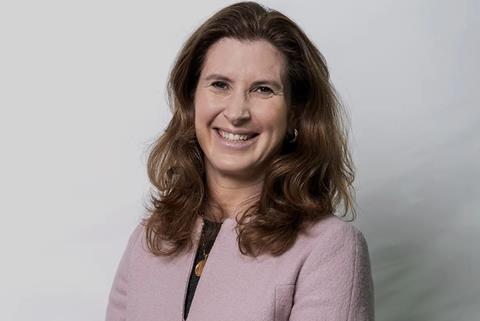
But do these due diligence checks ever change a deal?
Blue Earth says it may decline a transaction, revise targets or, in some cases, ask for contractual reporting and governance commitments. “We do not treat a weak impact case as something a discount can compensate for,” Muller says.
At the same time, Merry del Val says that while she has seen rigorous challenges to impact stories, she has not personally experienced a scenario where an “insufficiently proven” impact claim affects valuation or a purchase agreement in the way material sustainability risks can.
A potential gap as the market develops is losing the impact history, according to Broderick.
“What you need to know is what the original theory of change was, the logic under which it was bought. And we need the original buyer to have tracked it closely enough so that when I buy it as a secondary buyer, I can see what actually happened with that and whether it continued to generate impact or whether it actually ended up generating negative impact,” he stresses.
For institutional investors, the test is whether a secondary manager can trace the original impact case, establish what actually happened and explain what its ownership will contribute next.