



All IPE articles in Towards Net Zero: COP26 and Beyond – Page 3
-
 Special Report
Making sense of ESG Data: How to Quantify SDG Contribution
Sustainability is one of the world’s most prevalent topics, and within asset management investors are accordingly shifting their portfolios towards environmental, social and corporate governance (ESG) investing. As a result of this increased demand for ESG investing, various frameworks have emerged such as ESG rating, ESG metrics and Sustainable Development Goal (SDG) impact. These frameworks are defined by a vast amount of data and specific methodologies in order to measure the exposure. This poses a challenge for investors due to the necessity to understand the complexity of sustainability while also dealing with the quantity of available data.
-
-
 Special Report
Spatial finance: A data-driven perspective on industrial output
Artificial intelligence-enabled spatial finance data could help overcome poor and lagging data disclosure by listed and private companies
-
 Special Report
Green sentiment and its effects
A new type of index could help track demand for green assets
-
 Special Report
The prospects for green energy
Hydrogen and other green energy sources are beginning to attract private capital at scale
-
 Special Report
In search of an ESG standard in a sea of ESG ‘standards’
International Financial Reporting Standards (IFRS) and US Generally Accepted Accounting Principles (GAAP) have given us the tools to compare and evaluate revenue streams from vastly different sectors and industries. For example, we can calculate and contrast a firm that sells agricultural products in Germany vs. a firm that offers cloud computing services in Singapore.
-
 Special Report
Strategy: Focus on real-world GHG
A portfolio decarbonisation framework for real-world greenhouse gas emissions impact
-

-
Special Report
Net Zero and Just Transition for Pension Funds
The Conference of the Parties (COP) 26 in Glasgow represents a new milestone in the global fight against climate change, with a more climate-friendly US administration and growing mobilisation in favour of “Net Zero”. Six years on from the Paris agreement, the objective is clear: limiting temperature rise to well below 2°C above pre-industrial averages, which means reaching net-zero carbon emissions by 2050, and halving them by 2030.
-
 Special Report
Future proof: impact investing
Impact investing is trending. The International Finance Corporation (IFC) estimates that investor appetite could grow to USD 26 trillion, with as much as USD 5 trillion of that in private markets. Looking at the market size of impact investing, the Global Impact Investing Network (GIIN) currently estimates that it was USD 715 billion at the end of 2019, with private debt attracting the highest capital allocation (34%). The huge gap between potential demand and the current market size shows that there is great potential for the impact investing market to grow.
-
 Special Report
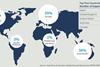
The global race to net zero
Leading global asset managers aiming to achieve net zero greenhouse gas emissions by 2050
-
 Special Report
Stewardship: Heavy-lifting network
Groups like Climate Action 100+ can help index managers to target their investment heft in engagement with individual companies
-
 Special Report
What makes an “impact” investment manager?
Understanding the required foundation to build, manage, and measure an impact portfolio.
-
 Features
Transformation as a strategy
Investing sustainably is making the jump from niche to mainstream, but as it gains in popularity, it is also becoming far more complex. Whereas investors initially preferred to exclude problematic companies or even entire sectors, there has since been a shift in attitudes.
- Previous Page
- Page1
- Page2
- Page3
- Next Page