








Green Bonds – Page 4
-
 News
NewsKPN pension fund to invest up to €700m in private debt
The €10bn pension fund considers the asset class a vehicle for impact investing
-
 Special Report
Bonds are back and aligned with a greener future
Bonds are back in vogue and, of the current fixed income opportunities available, we believe euro-denominated investment-grade credit offers one of the most compelling risk/reward profiles.
-
 Asset Class Reports
Room for more GSS bonds in emerging markets
The market has already broken new ground, but there’s hope for more innovation, say experts
-
 News
NewsGreen bonds ‘disproportionately popular’ among pension funds – study
Pension funds also display lower price elasticity than other investors when it comes to green bonds
-
 Features
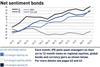
IPE Quest Expectations Indicator: September 2023
US officials are talking up the Ukrainian advance towards Melitopol, a sign that all is not well. Contrary to expectations, the biggest problem is not the Russian air force, but land mines. Trump’s legal problems are as worrisome as his inexplicable lead among Republicans. US abstinence in the struggle against climate change is a potential cause for a major trade war as the EU realises it must expand its regulations on importing ‘dirty’ products to prevent a free rider problem undermining its climate efforts. In the UK, Labour’s lead over the Conservatives remains crushing, making it difficult to claim the government has a popular mandate.
-
 Features
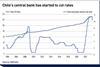
Fixed income, rates & currency: Uncertainty persists
As the major central banks in developed markets reach, or at least near, the end of their hiking cycles, markets, rather than identifying when policy rates will peak, focus is now on the conundrum of just how long these policy peaks will be maintained.
-
 Analysis
Analysis: Greenwashing risk in sovereign green bonds
‘The political cycle drives much higher volatility for sovereign green bonds than corporate ones when it comes to climate credibility,’ says Ulf Erlandsson
-
 News
NewsESG roundup: Asset managers still invest in assets misaligned with Paris Agreement
Plus: Article 8 funds suffer outflows of €14.6bn, says Morningstar report; GSS bonds could claim EU green bond standard label
-
 Opinion Pieces
Guest viewpoint: Green bonds require better coordination for real impact
Worth approximately $128.3trn (€117trn), the global bond market could add billions to the global effort to reach the United Nations’ sustainable development goals (SDGs). Yet only a fraction of the market currently consists of green, social and sustainability (GSS) bonds, and of that very little is being issued in developing countries. In 2022, annual GSS bond issuances stood at under 10% of overall bonds and only 13% of them came from entities in developing countries, a number that dwindles to around 5% when excluding issuers from China.
-
 Asset Class Reports
Fixed income & credit – Resilience bonds
Resilience bonds aim to encourage climate investment characterised by a more forward-thinking, preventative outlook
-
 Asset Class Reports
Fixed income & credit – Sustainability-linked bonds
Sovereigns and other issuers are yet to embrace sustainability-linked bonds but issuance is growing
-
 Asset Class Reports
Portfolio strategy – Fixed income & credit
Factors including rising inflation and interest rates, the war in Ukraine, and the uncertainty surrounding the global economy might have significantly slowed down the growth of an alternative asset class like private debt. But this has not been the case, and while fundraising by private debt managers for 2022 and 2023 might be challenging, investors are making new long-term commitments.
-
 News
NewsFolksam stows SEK1bn into World Bank road-safety bond
Swedish pensions and insurance group is sole investor in developing-world social bond issue prompted by own CEO
-
 Features
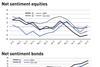
IPE Quest Expectations Indicator: June 2023
Continued loud bickering between the Wagner Group and the Russian army is protecting Putin from both, worsening the outlook for peace, while there are multiple signs that military supplies are approaching exhaustion. The coalition supporting Ukraine is stronger than ever, showing increasing willingness to provide military aircraft. Yet the offensive expected in February has not started. In the US, Florida governor Ron DeSantis is damaging his position with an unproductive row with Disney, while Trump has moved closer to a prison term. Gas consumption in the EU is falling faster than expected, due to efficiencies like heat pumps, changeover to electricity and solar panels. Macron scored nicely by sponsoring the participation of Zelensky at the Hiroshima G7; Sunak failed to centre political attention on China.
-
 Features
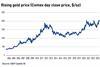
Fixed income, rates & currency: Strong labour markets surprise
Global purchasing managers’ index (PMI) data, which measures the state of the US economy, has been mostly strong, although manufacturing indices have been considerably weaker than services, perhaps reflecting their greater sensitivity to higher interest rates.
-
 Features
IPE Quest Expectations Indicator May 2023
Russian air superiority over Ukraine is coming to an end due to lack of equipment. Destroying civilian targets is counterproductive and consumes ammunition. Bakhmut is eating into Russian resources, while Ukraine is being re-armed. History teaches that better technology, rather than numerical superiority, wins wars. But even a lopsided Ukrainian win would not automatically mean peace.
-
 Asset Class Reports
Fixed income – New beginning for bond investors
A painful 2022 for fixed income means attractive opportunities and a possible normalisation in risk and return
-
 Asset Class Reports
Portfolio strategy – Fixed income
Last year ushered in a new era for global fixed income and credit markets. It was the worst, in terms of returns, for bond investors in years, but it signalled a regime change. Investors need to be prepared for structurally higher inflation and rates, as well as higher volatility. But for fixed income managers, this is an environment where value is easier to find. Our report looks at this new beginning for fixed income investors, and at how selectivity has become key in the high yield and loan markets.
-
 News
NewsInvestors pin hopes on EU Green Bond Standard in fight against greenwashing
Most existing green bonds are unlikely to qualify as green under the new standard
-
 Features
Ahead of the curve: Introducing the concept of a carbon risk-free curve
As global investors and companies progress towards their net-zero emissions targets, the concept of a carbon risk-free curve becomes increasingly relevant within the fixed-income market. In our view, this curve should provide a reference for evaluating the risk levels of bonds in relation to their issuers’ CO₂-equivalent (CO₂e) emissions and can therefore help investors to assess the impact of changes in CO₂e emissions on the yield spread of fixed-income bonds.


