



Latest from IPE Magazine – Page 80
-
 Interviews
On the record: Beware of the label
Three European pension funds share their views on greenwashing and discuss what to do about it
-
 Special Report
In search of an ESG standard in a sea of ESG ‘standards’
International Financial Reporting Standards (IFRS) and US Generally Accepted Accounting Principles (GAAP) have given us the tools to compare and evaluate revenue streams from vastly different sectors and industries. For example, we can calculate and contrast a firm that sells agricultural products in Germany vs. a firm that offers cloud computing services in Singapore.
-
 Special Report
Future proof: impact investing
Impact investing is trending. The International Finance Corporation (IFC) estimates that investor appetite could grow to USD 26 trillion, with as much as USD 5 trillion of that in private markets. Looking at the market size of impact investing, the Global Impact Investing Network (GIIN) currently estimates that it was USD 715 billion at the end of 2019, with private debt attracting the highest capital allocation (34%). The huge gap between potential demand and the current market size shows that there is great potential for the impact investing market to grow.
-
 Special Report
Debunking 7 misconceptions about scope 3 emissions
In this investment viewpoint we describe seven key misconceptions that we think may have deterred investors from fully integrating considerations linked to scope 3 emissions and lead to confusion in the market.
-
 Special Report
Measuring a country’s carbon emissions: A debate with high stakes
As the effects of climate change become increasingly apparent—from rising sea levels to more frequent and devastating natural disasters—the need for action becomes more urgent by the day. Environmental responsibility has permeated all sectors of the financial industry. In particular, asset managers have seen increasing interest from clients, regulators and the general public to facilitate this effort by directing financial flows toward entities that make better environmental citizens.
-
Special Report
Net Zero and Just Transition for Pension Funds
The Conference of the Parties (COP) 26 in Glasgow represents a new milestone in the global fight against climate change, with a more climate-friendly US administration and growing mobilisation in favour of “Net Zero”. Six years on from the Paris agreement, the objective is clear: limiting temperature rise to well below 2°C above pre-industrial averages, which means reaching net-zero carbon emissions by 2050, and halving them by 2030.
-
 Special Report
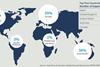
The global race to net zero
Leading global asset managers aiming to achieve net zero greenhouse gas emissions by 2050
-
 Features
Transformation as a strategy
Investing sustainably is making the jump from niche to mainstream, but as it gains in popularity, it is also becoming far more complex. Whereas investors initially preferred to exclude problematic companies or even entire sectors, there has since been a shift in attitudes.
-
 Special Report
What makes an “impact” investment manager?
Understanding the required foundation to build, manage, and measure an impact portfolio.
-
 Special Report
Insurance Linked Securities: developing climate resilience
Insurance Linked Securities (ILS) are an alternative asset class where investors’ returns are primarily linked to the occurrence of natural catastrophes. Since the majority of exposures emanate from climate-related risks, the potential impact of climate change is a key consideration for ILS managers and investors. In parallel, ILS is receiving increased recognition for its inherent ESG-positive characteristics with the critical role insurance plays in helping society develop long-term resilience.
-
 Special Report
Unravelling the conflicts in ‘Double Materiality’
Where do you draw the ‘moral’ line and how do you have a genuinely positive impact?
-

-
 Special Report
Long-term investors absolutely cannot afford to function without a Climate lens (and why that may not be enough)
Sponsored Commentary from Morgan Stanley
-
 Special Report
The wheat and the chaff: Man Group’s case study in rating an RI Fund
As responsible investing becomes default best practice, it is increasingly important that allocators can separate the wheat from the chaff, distinguishing genuine responsible investment managers from those that greenwash. Below, we provide a case study that sets out the best practices for allocators.
-
 Special Report
Turning Net Zero pledges into action
In the run-up to COP26, Net Zero pledges have become increasingly ubiquitous. Over 100 countries, including China, the U.S. and the EU, have pledged to become Net Zero. Further, over 100 local governments, nearly 1000 cities and 20003 businesses pledged to operate at Net Zero. Net Zero is now also the trillion dollar challenge for investors. The Net Zero Asset Owner Alliance and the Net Zero Investment Framework have embarked to build Net Zero portfolios.
-
 Special Report
Global poverty and the role businesses can play to help put an end to it
The Sustainable Development Goals (SDGs) are a blueprint for a better and more sustainable future for all. It is therefore right that the first of them is to “end poverty in all its forms everywhere”. However, the onset of the Covid-19 global pandemic has dealt a big blow to this aim, with global poverty increasing last year for the first time in decades.
-
Special Report
Heterogeneity: the key to good business management
Diversity and inclusion benefit companies and investments in the long term. This is the conclusion from various reports published over the last year by training institutes and financial-consulting companies. Information and research form the basis for analysis and screening tools to enable a financial model that Etica has always believed in: a sustainable, ethical and inclusive economic system.
-
 Special Report
An actor for change
The Edmond de Rothschild Group, whose roots date back 250 years, is committed to supporting the major changes that shape our society, with the conviction that investment must be built over time and have an impact on the real economy. Our independence gives us the freedom to express our convictions, reflected in our voting policy and our leading engagement approach.
-
 Special Report
From climate change to biodiversity, and vice-versa
In addition to taking note of the extent of the climate crisis, successive IPCC reports have stressed that carbon neutrality must be achieved while protecting biodiversity. Indeed, half of the CO2 emissions generated from human activity are captured by land- and sea-based organisms, which absorb about 9.5 billion tonnes of CO2 each year. Preserving, sustainably managing, and restoring ecosystems can thus contribute to decarbonisation efforts.
-
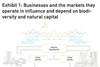 Special Report
How can the investment industry address the biodiversity crisis?
It’s never been more important for the financial sector, including the investment industry, to take steps to help safeguard the planet’s threatened biodiversity. ESG analyst at BNP Paribas Asset Management, Robert-Alexandre Poujade explores the areas in which investors can make a difference.